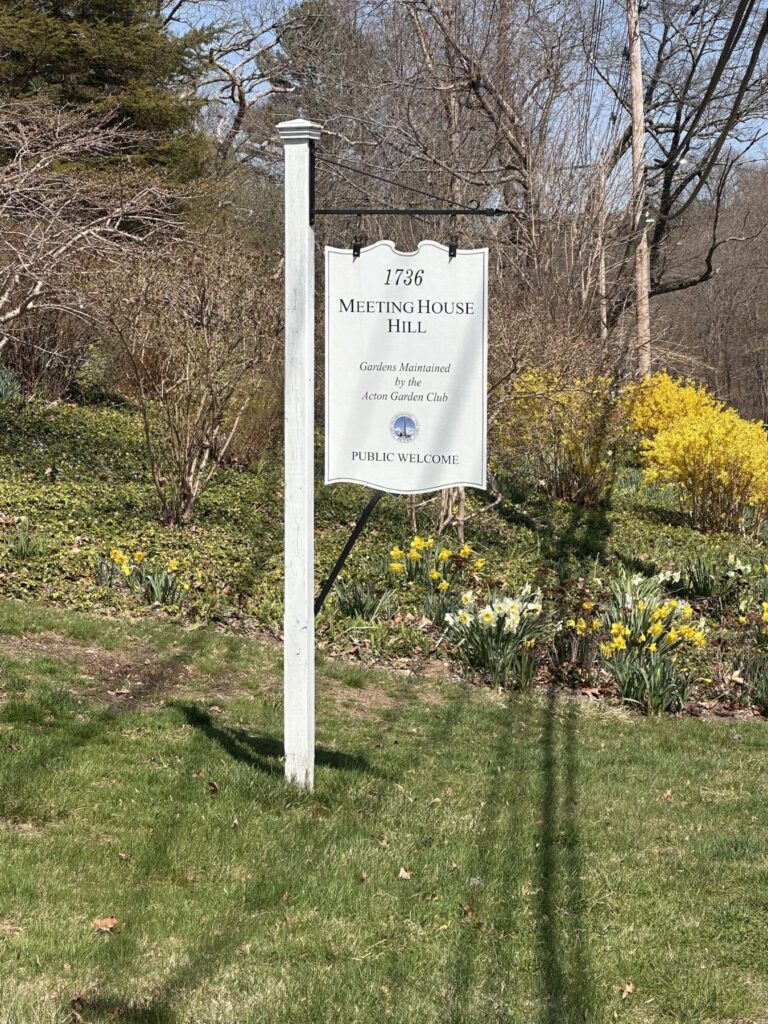
It’s been quite a winter and quite a spring! We thought spring would never come, with snowflakes a week ago and now, a week later, 70 degrees and a taste of summer. The daffodils and forsythia have finally decided to emerge. Stop and visit the Daffodil Hill and The Wildflower Gardens so beautifully cultivated by the Acton Garden Club at Meeting House Hill (on the corner of Main Street and Nagog Hill Road) and appreciate the daffodils as you drive down Main Street. It is the herald of spring and Patriot’s Day in Acton.
If you are thinking of working on your own garden–and we’ve all been itching to get out there–consider the hints below:
Bulb Foliage
Tulips that have survived the deer grazing, drought, and moles have yet to bloom. When they do, here’s what to do.
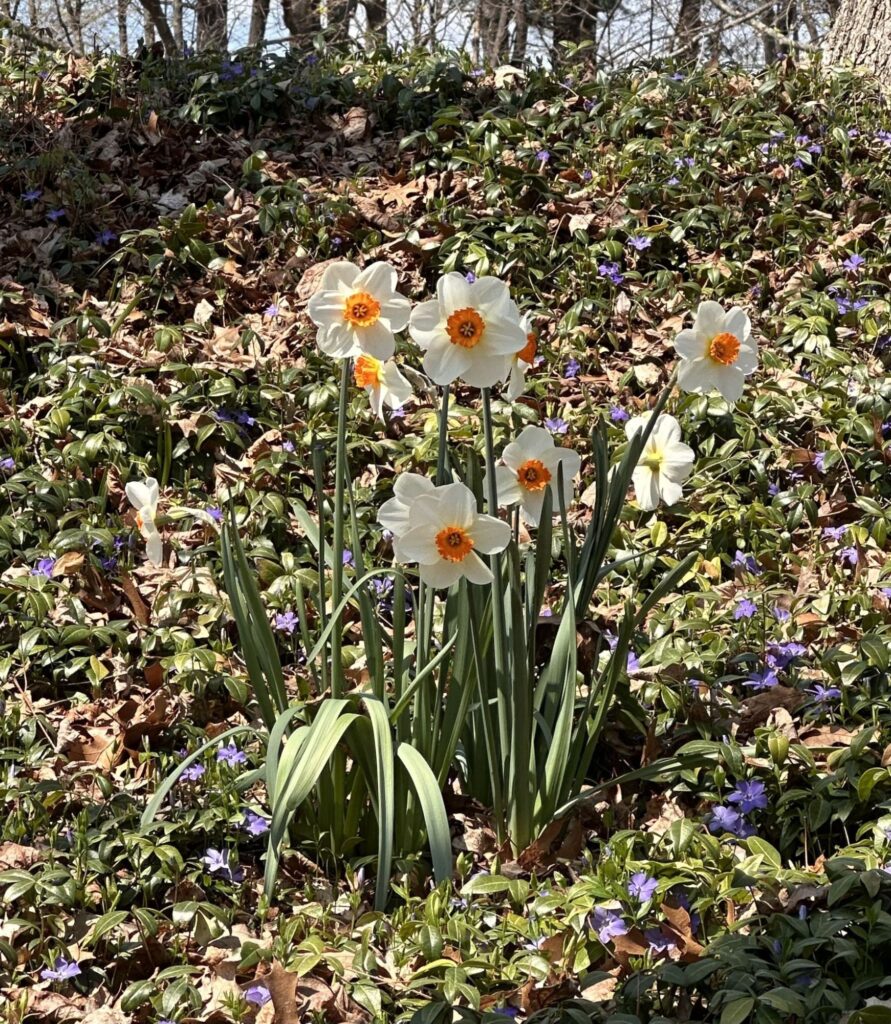
When the spring bulbs begin to decline, it’s important not to cut back the foliage. After flowering, the plants continue to photosynthesize and are storing these food reserves in the bulb for next year. Removing spent flower stems is all right but let the foliage die back naturally. Do not tie-back or braid foliage as plants need as much leaf area possible to photosynthesize.
Pruning and Dividing Shrubs
Shrubs that bloom in the spring will have set buds in late summer to early fall of the previous year. These shrubs should not be pruned until after they bloom in the spring.
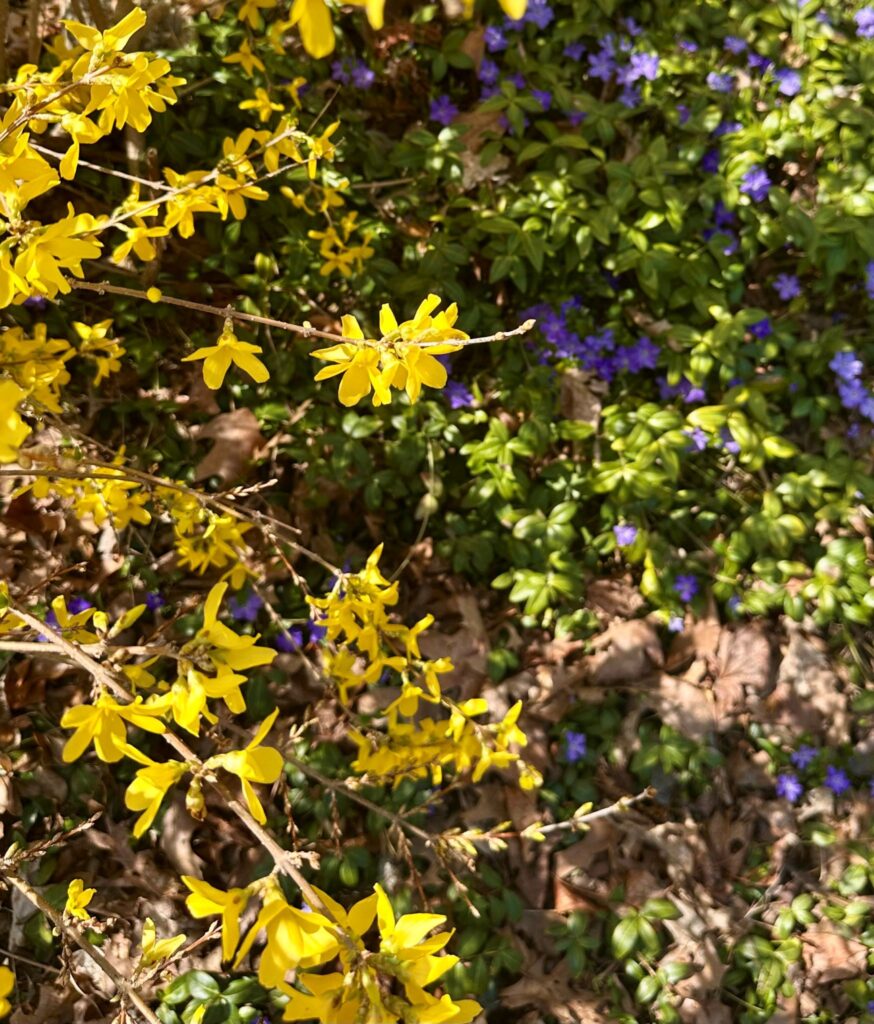
Summer and fall blooming shrubs develop buds in the spring and can be pruned in early spring before bud set. Prune them now! The appearance of forsythia flowers is a good indicator. Prune: butterfly bush (Buddleia), smoke tree (Cotinus), Hydrangea arborescens ‘Annabelle’, Hydrangea paniculata varieties, beautyberry bush (Callicarpa), summersweet (Clethra), sweetspire (Itea), Rose of Sharon (Hibiscus syriacus) and Spirea.
For an easy afternoon, I will be walking about with my clippers and listening to Vivaldi’s “Spring” in the Four Seasons, while I clip the dead wood on my hydrangeas.
Hydrangeas that bloomed on last year’s old wood should be pruned after flowering. Remove only dead stems now. Prune climbing hydrangea and train it to a vertical structure.
Prune out winter breakage as soon as seen. With broadleaf evergreens such as rhododendron, boxwood, and holly, wait a month or two to see if the browned leaves will drop off and re-leaf naturally.
I will be waiting on the rhododendron that were a tasty snack for the many deer, as advised, knowing they will revive. I am applying lots of tick repellant to my clothes and taking precautions as I already removed my first tick of the season.
Prune roses by cutting back to the base of all canes that are dead, damaged, thin or weak. On hybrid tea, grandiflora and floribunda types, remove all but 3 to 5 of the remaining canes, prune them to a height of 15-18 inches. Make sure the cut is just above an outward facing bud. Modern shrub roses need less intensive pruning. Thin out a third of the oldest canes, cutting them back to the base.
April is a good time to transplant a shrub. Do it before the leaves emerge.
Perennials
Dig and divide perennials as soon as their new shoots appear — the earlier, the better. Most perennials will benefit from division every 3 to 5 years to reinvigorate the plants and ensure abundant blooms from year to year. When dividing older perennials, discard the center of each clump and replant with sections from the outer edges where shoots are more vigorous. It is much easier to divide hostas in the spring when the foliage is just emerging. In the fall, it is more difficult, as the leaf foliage gets in the way.
Acton Garden Club members will be digging and dividing for the Annual Plant Sale which is only a month away on May 17, 2026.
Lawn and Garden
Be sure the lawn is dry before raking to remove branches, stones and other debris. Lightly raking the lawn with a leaf rake will help to rejuvenate it from the winter.. Fertilize only if a late fall application was not made, and in concert with Massachusetts Plant Nutrient Regulations which seek to minimize the impacts of the nutrients on surface and ground water resources to protect human health and the environment. When forsythia is in full bloom, apply pre-emergent crabgrass control, if needed.
Do not work your soil when it is wet. It will damage the soil structure. Use the squeeze test: Take a handful of soil and squeeze it. If the soil crumbles easily when you open your hand, it is ready to be dug. It is not ready if water comes out.
Begin to edge beds and prepare for mulching. Check the depth of landscape mulches, replenish before annual weeds begin to germinate. Mulches should be 2 to 4 inches deep, but not in contact with woody plants. It’s best to mulch before herbaceous plants emerge. Mulch may not be needed every year. A light top dressing may be adequate.
How I Keep A Record of Plants in my Garden
As you purchase new plants for the garden this spring, be sure to make a list or an Excel file. In my file, I include the following information: botanical and common names, size at maturity, flower color, light requirements, location in the garden, garden center where you purchased, and price. Make space for comments.
I also make a map of the new and existing plants location. I use a clipboard that accommodates legal size paper — more space than 8½ x 11 paper. Attach a pencil with an eraser. Use one page per garden bed. I give each garden bed a name: Big Bed, Rockery, Hosta, etc. My maps are not graphically correct. I just eyeball the plants’ location. My maps are a bit messy, but they work for me. Try to use botanical names.
I must admit, I don’t use botanical names, but it’s a good idea to have a general map of your garden, even if it’s in pots, which helps you plan for the next year.
I am studying my vegetable garden map now for this summer and I am just finishing my butternut squash of last year — my inspiration for growing more this year!
Judy Dembsey is chair of environmental education for the Acton Garden Club. Ann Marie Testarmata is chair of public relations for the Acton Garden Club.
Note: Check out the April, 2025 hints as well. Good solid advice, like the Farmer’s Almanac, doesn’t change a whole lot from year to year and is worth reviewing.