“Everyone needs help now and then.” These are gentle words of wisdom passed on from grandparent to grandchild in The Great Race: The Story of the Chinese Zodiac, the latest performance in Theatre III’s Child’s Play series running June 13–14 and 20–21. (To learn more about how this work came to be staged by Theatre III in collaboration with the Acton Chinese Language School, see the Acton Exchange article, “Theatre III brings Chinese Zodiac tale to life”.)
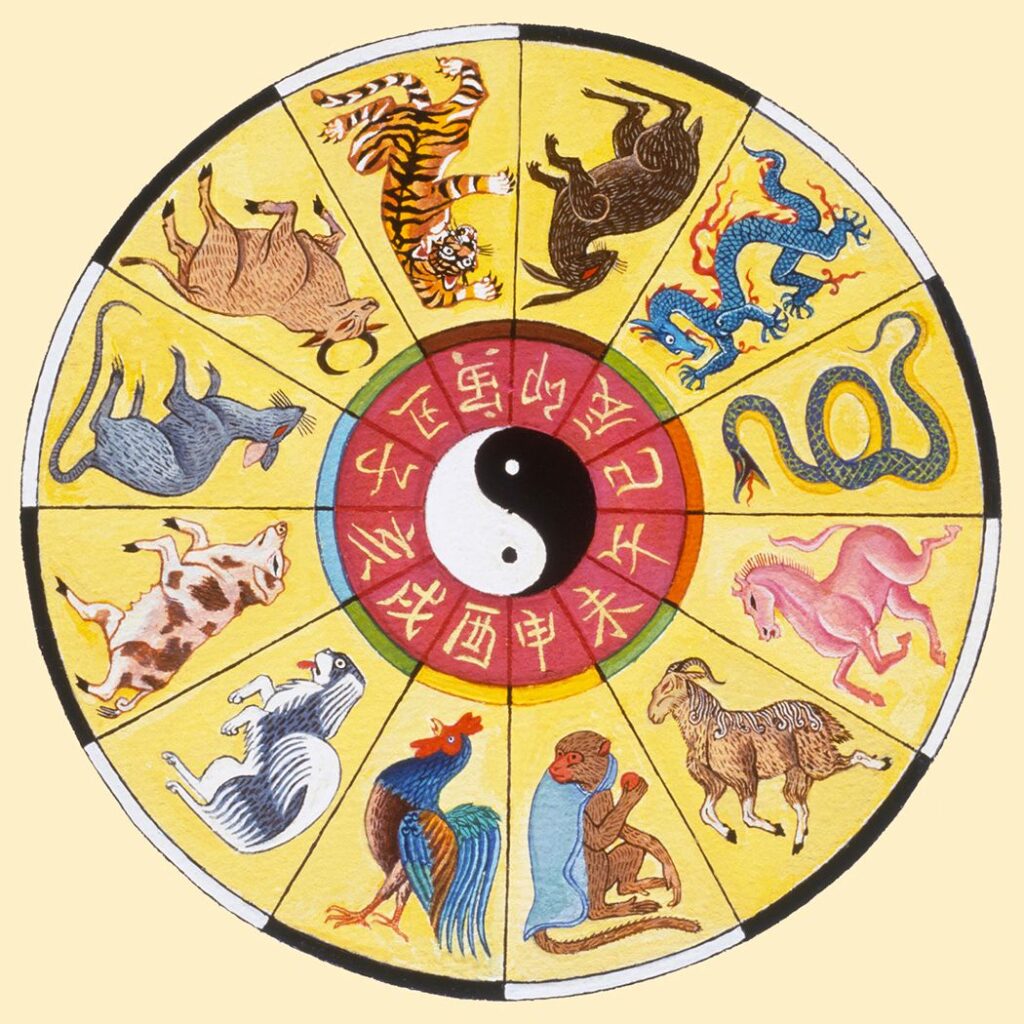
The play, by Reiko Ho, is a dynamic retelling of one of the most beloved tales in Chinese folklore. Bookended by Kung Kung (grandfather) and Po Po (grandmother) teaching their grandchildren, Freddie and Ivy, how to make dumplings on Chinese New Year in their backyard in Hawai’i, it acts out the story of how the Jade Emperor realized he needed a way to mark the passage of each year. He decreed that a race be held to determine which animals would be immortalized on the wheel of time. The first 12 animals to cross the mighty river before the setting sun would earn a spot. We then learn the traits of each animal and the methods they use to successfully make their way to the emperor.
Geared for Children
Full of subtle lessons and playful movement, this play is geared toward children grades K-3. The language and actions are concrete enough for them to understand without being overly simplistic or heavy-handed. For example, when Dog is wasting time frolicking in the water, performing all kinds of water ballet that kids will surely get a kick out of, Freddie shouts, “Yo! Stop floating around and swim! You have to get to the other side before the setting of the sun!”
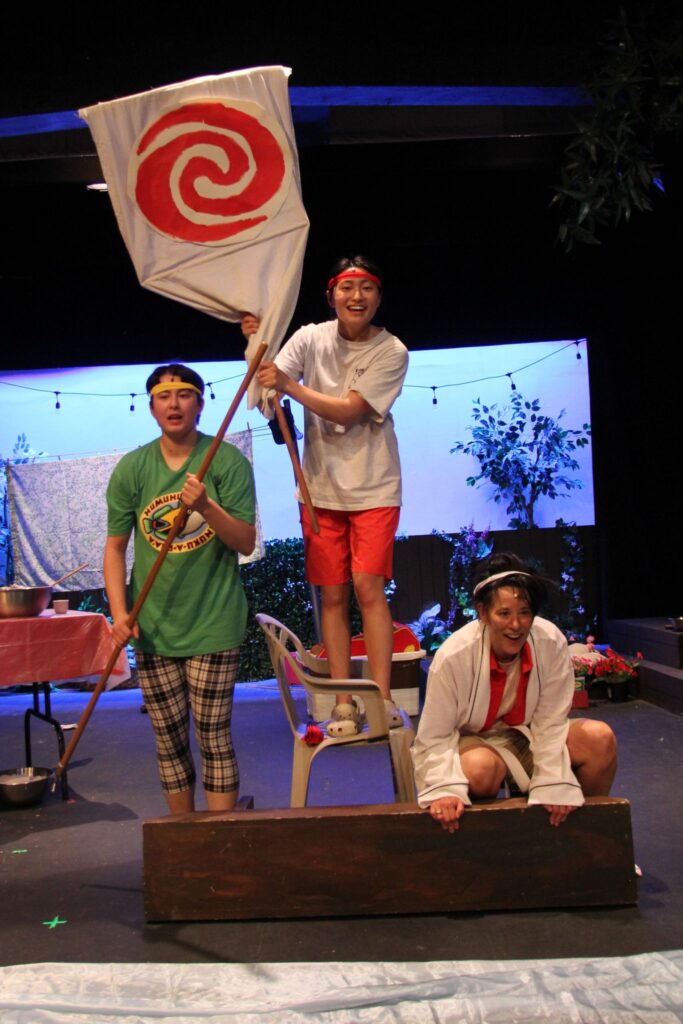
One of several things I like about this play is that the children are recognizable as children. They display a whole range of behaviors and emotions typical of kids, from stubborn, sullen, and argumentative to silly, curious, and loving. I think this is important. We want to see relatable characters on stage. If kids recognize themselves, even if subconsciously, it can help their sense of belonging.
Props and Performance
The playwright’s notes indicate that the laundry hanging on the line and other household items are to be transformed into puppets and props. Costume Designer Elizabeth Hoermann and Props Designer Patrick Cleary did a clever job with this. Flipping the orange animal-striped bathing suit over Cat’s ears to instantly change it to Tiger and tucking the mesh lining under its chin to keep it in place was brilliant. The long sock over an arm for Snake, while fairly obvious, was simple and effective. What touched me about the costumes and hand props is that they use the kind of everyday items that imaginative and resourceful kids would light upon themselves when putting on a play for their parents.
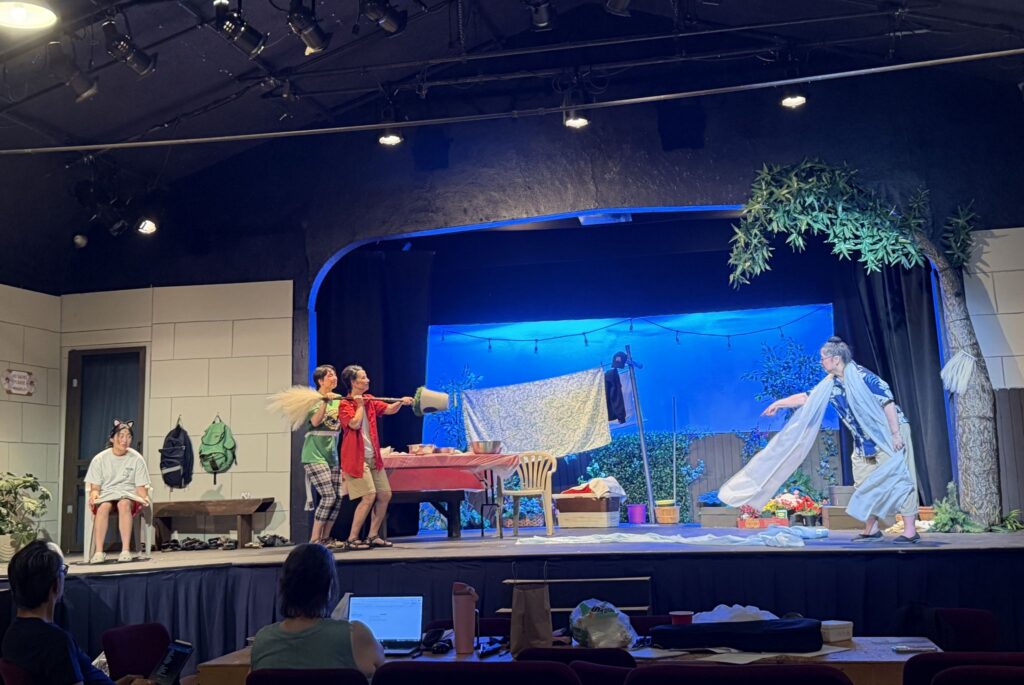
The cast, Kung Kung (Kimber Lynn Drake), Po Po (Cherry Lynn Zinger), Freddie (Joy Ma), and Ivy (Daina August) are calm, yet animated on stage, bringing their animal characters to life. They, along with the production values of the performance, bring the right kind of energy to keep children entertained without scaring them. (House lights don’t go completely dark and sound is kept moderate.)
Drake is the clear lead, playing the most characters with the most action but without being domineering. Zinger is sweet and lovable as Po Po and Boar. Ma is convincing as a petulant child and August is sympathetic as the easier-going sibling. All of them seamlessly move in and out of their animal characters.
It is fun to learn the attributes of the various animals and how these manifest as they figure out how to cross the mighty river. Quick-witted rat hitches a ride with Ox. Refined Sifu Rabbit is chill and trusts the process. Sweet and gentle Sheep, bright and clever Monkey, and ambitious and daring Rooster join forces to build a boat together and paddle their way across. Their combined patience, smarts, and strength show the value of cooperation and teamwork. In this, and other ways, the play delivers life lessons in a gentle manner.
Passing Down Culture
Family and tradition also play a prominent role. Freddie grumbles about having to make dumplings for the new year celebration and states that they’d rather eat a brownie sundae than the almond cookies that symbolize sweetness for the year ahead. But after being drawn into the zodiac origin story they emerge with a new appreciation for their culture, and for their grandparents, it would seem.
In the show’s program, Ho writes that “storytelling is an important part of Chinese culture and a means of keeping traditions alive.” The same can be said for many cultures around the world. Stories teach us about human behavior. Interacting with our elders connects us to history and tradition in a way that helps us feel more grounded in a topsy-turvy world. Life may feel like a rat race sometimes. That’s all the more reason to slow down and spend time over food and conversation with those you love, and to go out and see a play with them!
Visit Theatre III’s website for details and tickets.
Dana Lissy is a member of the Board of Directors of the Acton Exchange, an occasional writer, and a patron of the arts.