On a blue sky Saturday, when many folks chose to be outside on the rail trails, work in their gardens, or visit the playgrounds in town, the Medical Reserve Corps (MRC) held an emergency preparedness workshop at the Acton Recreation Center on Audubon Drive. A half dozen attendees learned that the space in which they sat had been used as an emergency shelter during an ice storm that resulted in a few days without power across Acton back in 2018.
Lois Luniewicz, the MRC Coordinator for the Central Middlesex region, was introduced to the attendees by Paula Walsh, a Central Middlesex MRC member who also works part-time in the Recreation Department and was recently appointed to the Acton Nursing Services Advisory Committee. Walsh noted that Fire Chief Anita Arnum and Environmental Health Manager Matt Dow were also present to provide town-specific details on emergency preparedness.
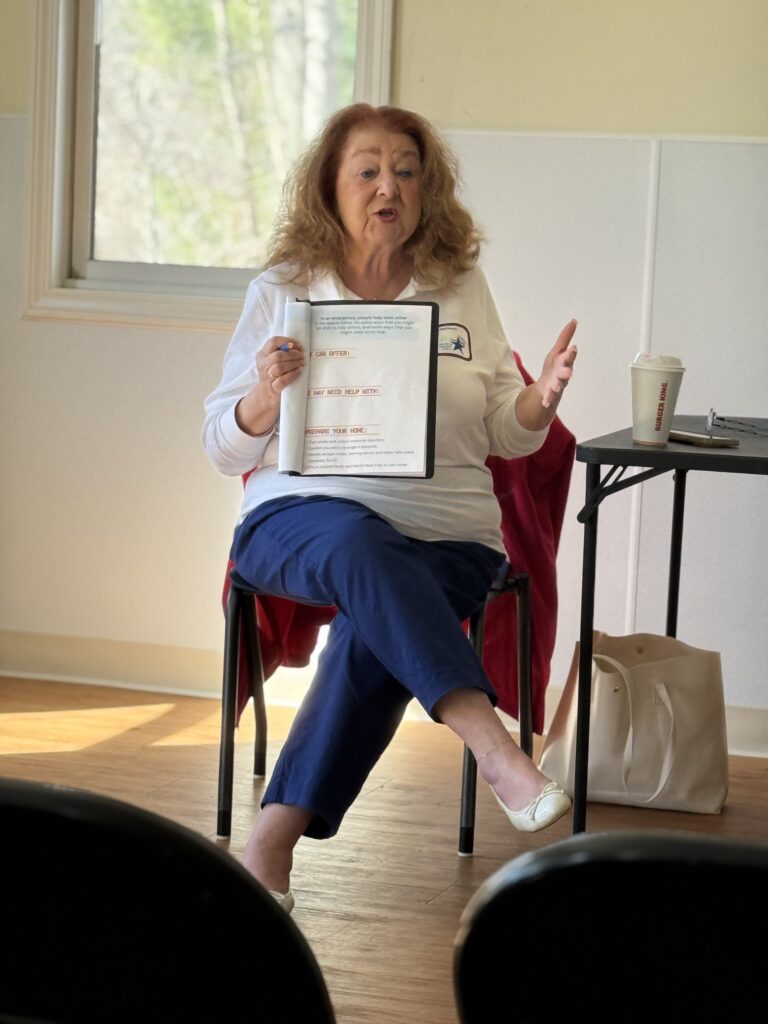
The Medical Reserve Corps, a national network of around 300,000 volunteers, was established in 2002 after 9/11, by the US Department of Health and Human Services, to ensure a system of vetting and verifying the volunteers who can provide medical, search and rescue, and communication services. Luniewicz shared that there are 35 groups in MA, and that “when these groups are not responding, they focus on being prepared. Your town staff is equipped and qualified to respond, but extra hands are always welcome.”
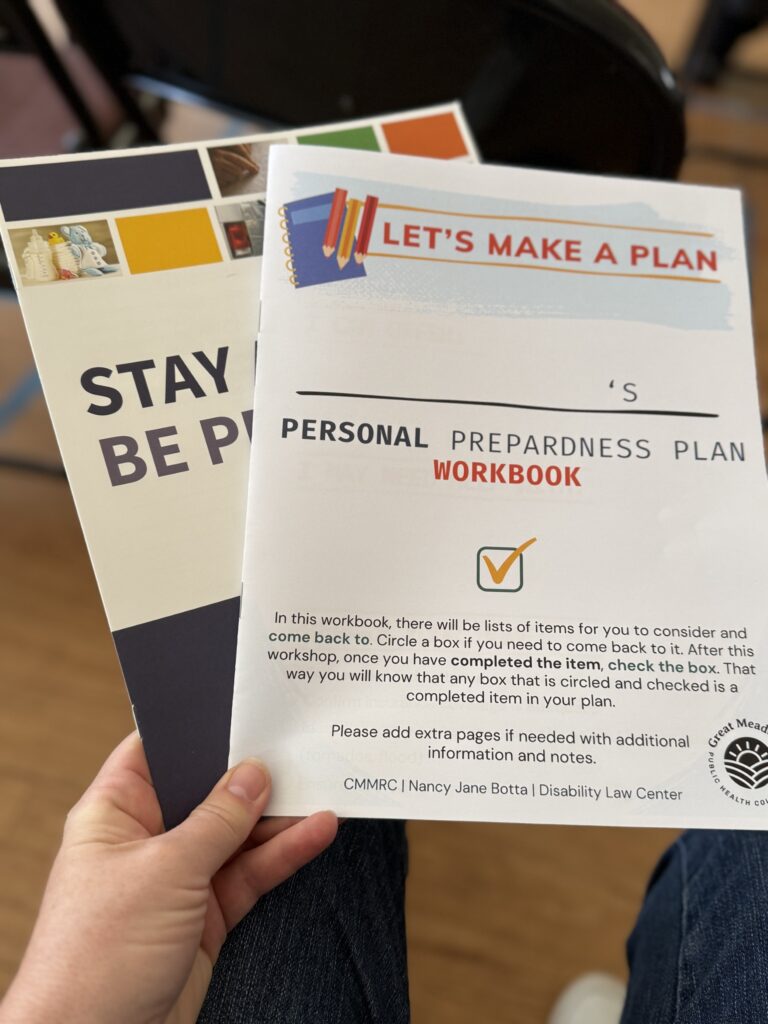
During the workshop, participants were guided through a Personal Preparedness Plan Workbook, created for households to customize and have on hand at home and bring along with them in the event of evacuation. Several ideas for home tasks to complete were included:
- regular smoke and CO detector checks,
- identification of an appropriate space in the home to shelter during a tornado,
- packing a “go-bag” for evacuation, and
- gathering supplies for a shelter-in-place.
Luniewicz recommends having 1 gallon of water per person per day, plus water for any household pets. She suggested, “If you are going away for a few days during an emergency, you won’t fit all of what you need in a backpack. I recommend a rolling duffel or suitcase.”
“After Katrina, a federal mandate was put in place to prevent pets from being left behind,” she added, noting that many deaths were the result of people not willing to evacuate in order to continue caring for pets. She also suggested locating pet friendly hotels in advance. Chief Arnum noted that the law now requires shelters to make accommodations for pets.
Items suggested for packing in a “go-bag” included:
- a manual can opener
- maps
- flashlights/batteries
- radio
- medicines
- pet items, including water and carriers
- special food
- disinfectant (think contamination due to flooding)
- a signaling device
- N95 masks
- a paper copy of your personal emergency plan
- medical info (ex: eyeglass and hearing aid prescriptions)
- emergency numbers for family and medical providers (in case of no cell phone reception or no charge)
- advanced directive
- a blanket or sleeping bag
Chief Arnum suggested that codes for phones and laptops be given to a trusted family member in the event that you are incapacitated due to injury or medical episode.
Several other tips were shared by Luniewicz, Arnum, Dow, and attendees as well: if you don’t have a bathtub to fill, you can fill a sink or a cooler; to ensure coverage of possessions, especially heirlooms, take photos of the inside of your home; ensure documents are in PDF format as they can be opened by any computer, and add dates; File of Life documents are available at the fire department and senior center, and first responders will look for those on your refrigerator.
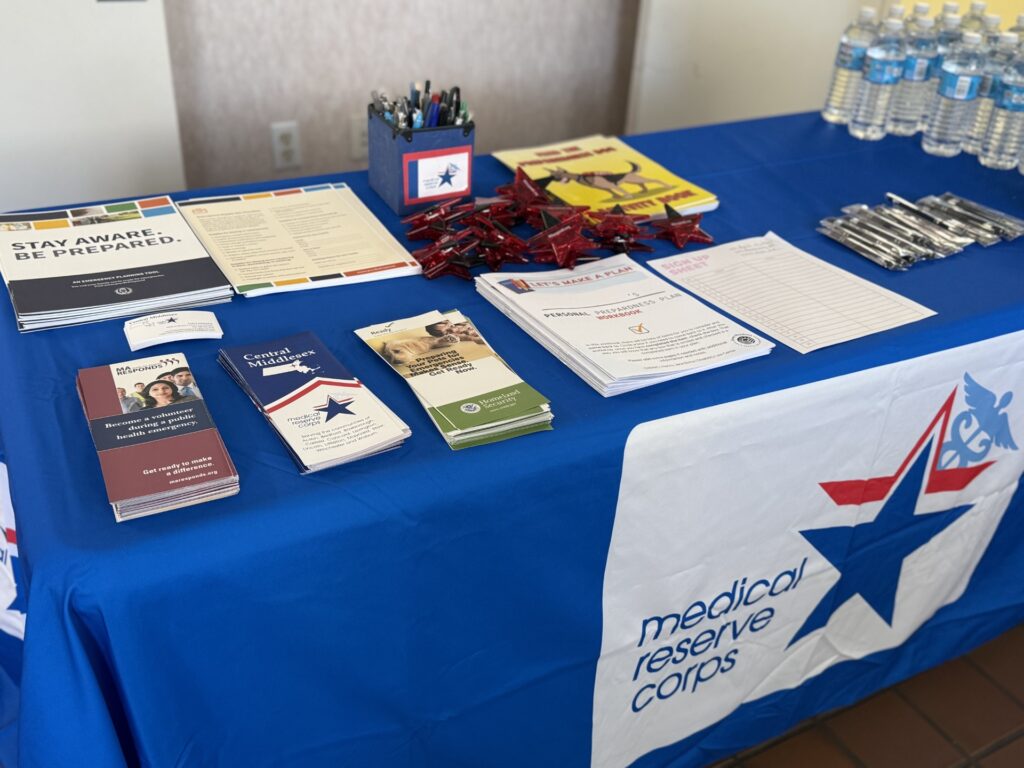
If you’re interested in volunteering for the Medical Reserve Corps, contact Luniewicz at loisluniewicz@comcast.net. You will need to submit documentation for a CORI (Massachusetts Criminal Offender Record Information) and SORI (Massachusetts Sex Offender Record Information) check, and create a profile on MA Responds. Even if you don’t have a medical background, Luniewicz emphasized, “Volunteers can assist in a variety of ways.”