For decades, George Howell has been at the forefront of a revolution to transform coffee from a commodity into a craft. Today, his influence stretches from his small roastery on School Street in Acton to coffee farms around the world. Howell’s search for the best beans has taken him to high altitude coffee farms in Yemen, the birthplace of coffee cultivation, to Guatemala, Kenya, Costa Rica, and beyond.
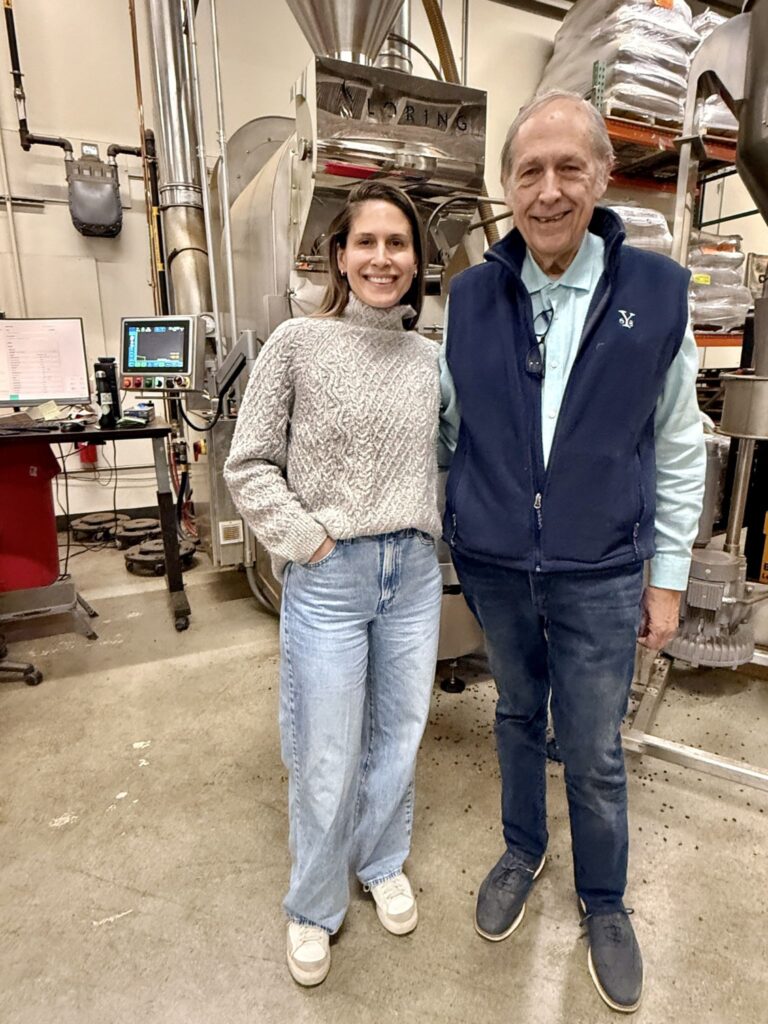
Howell discovered high quality specialty coffees when he moved to the San Francisco Bay area after graduating from Yale University in 1968. Like fine wines, coffee can have unique flavors, such as floral, fruity, and chocolatey, depending on the soil and climate where the beans are grown.
As a college student, “I drank iced coffee with lots of milk and sugar, so it was nothing, a thoughtless process. It wasn’t until I moved to the West Coast, that I bought some fresh coffee, a French press type coffee maker, and started drinking, for the first time, black coffee, as opposed to with milk,” says Howell. It was an eye-opening experience.
After returning to the East, in 1975 Howell founded the popular Harvard Square coffee shop, The Coffee Connection. The business expanded into a 24-location café and store chain before he sold it to Starbucks in 1994 for $23 million. Through The Coffee Connection, Howell helped raise quality standards in specialty coffee, earning a Lifetime Achievement Award from the Specialty Coffee Association of America in 1996.
Howell, now an Acton resident, recently celebrated his 50th anniversary as a coffee roaster. “We’ve been pioneers in specialty coffee for 50 years,” he says. “Back in 1975, The Coffee Connection was already putting the roast date on every barrel and bag, so we knew exactly when the coffee was roasted, something no one else did for another 20 years.”
But his real legacy is redefining how coffee is sourced and valued. In 1997, Howell began working on economic sustainability models for coffee farmers under the United Nations and International Coffee Organization. He focused on improving profitability for growers by improving quality. In 1999, he co-founded Cup of Excellence, an international coffee competition and auction to support quality-focused farmers.
In 2004, he founded George Howell Coffee and opened the Roastery at 312 School St. in Acton, which sells coffee online but is not a café. In addition to providing employment for approximately 20 employees, the company donates coffee to the Acton Food Pantry once a month.
Nearly 20 years ago, the company began the novel approach of freezing green coffee beans to preserve freshness. “We were unique among roasters in the country or in the world,” says Howell. “Freezing raw, unroasted beans was a revolution. Few roasters are doing that even now.”
“When coffee comes in through a port in New Jersey, it comes in a green bean form,” explains coffee buyer Jenny Howell, who joined her father in the business and has lived in Acton with her husband since 2015. “From the port, it will go straight to an off-site freezer, and that’s where it’s stored until we want to roast it.”
Each cycle is carefully timed. “We’ll bring a truckload of coffee to the Roastery on a Friday and defrost it over the weekend. That’s what we’ll roast for the next one to two weeks, and then the process starts over,” she says. “If the coffee sits too long in the warehouse, it will start to age and deteriorate. Freezing helps us ensure our customers will have fresh tasting coffee all year long.” (Similarly, she points out, you have 30 minutes to drink a cup of coffee before it oxides and has a flat flavor.)
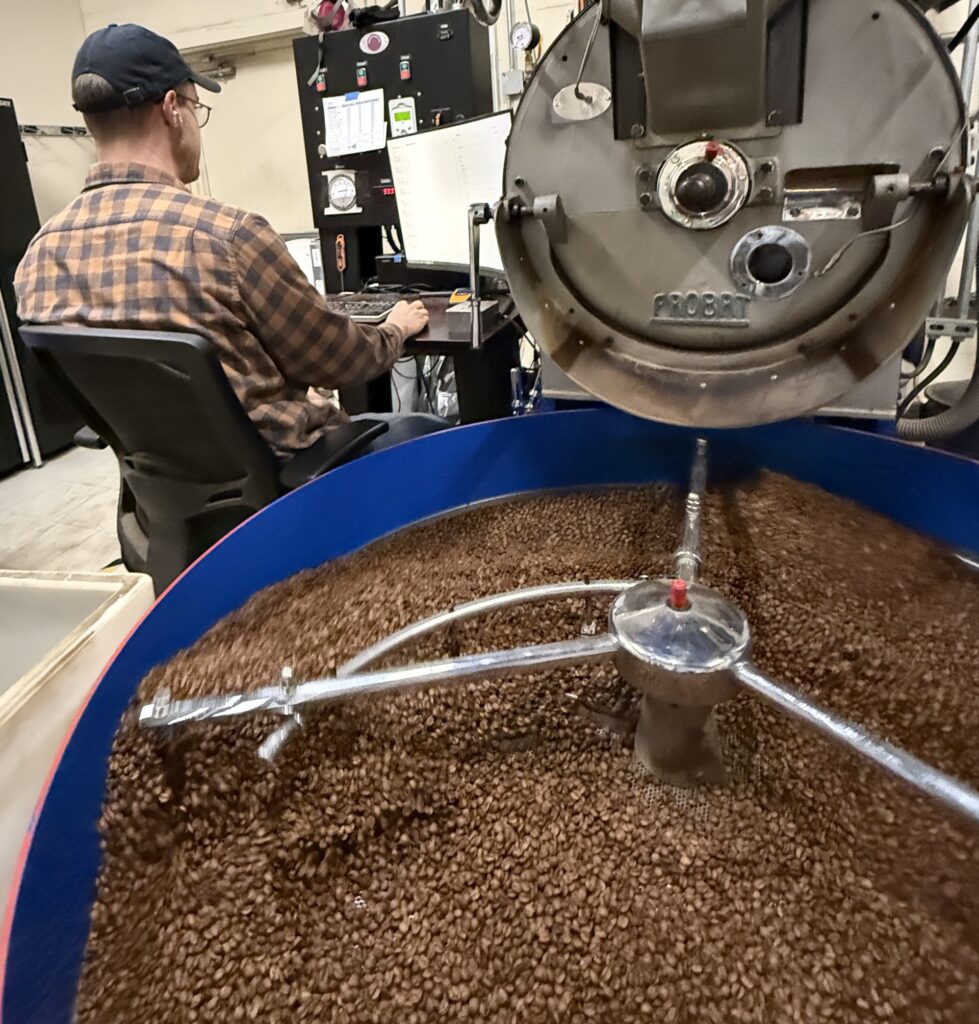
Inside the Roastery, tall stacks of burlap sacks filled with raw, green beans reach toward the ceiling. Gas-fired roasters, operated by skilled technicians, heat the small beans at around 400 degrees, transforming them into aromatic, brown beans nearly twice their original size. Each batch roasts for around 12 minutes, with computer guidance. Once the desired roast or darkness is achieved, the beans are cooled as quickly as possible to stop the process.
The company’s latest innovation focuses on helping customers better understand flavor at a glance. At the top of the coffee bag labels are narrow bars of colors with tasting notes, such as “dark chocolate”, “molasses”, or “tangerine”. The majority of the label is light to dark brown, indicating the coffee’s roast level. Labels also identify the coffee’s origin, its country and growers. Still, Howell emphasizes that the essence should be coffee. He encourages customers to taste varieties side by side to appreciate their subtle differences and sip black coffee first before deciding to put milk or sugar in it.
Today, Howell continues to visit coffee farms with his daughter at his side, building long-term partnerships and ensuring quality from the ground up. He has seen firsthand how farmers are adapting to a changing climate, embracing regenerative agriculture practices that restore soil health, increase biodiversity, and improve water retention. He notes that many growers have been forced to move crops to higher elevations — from around 3,000 to 5,000 feet — in response to rising temperatures.
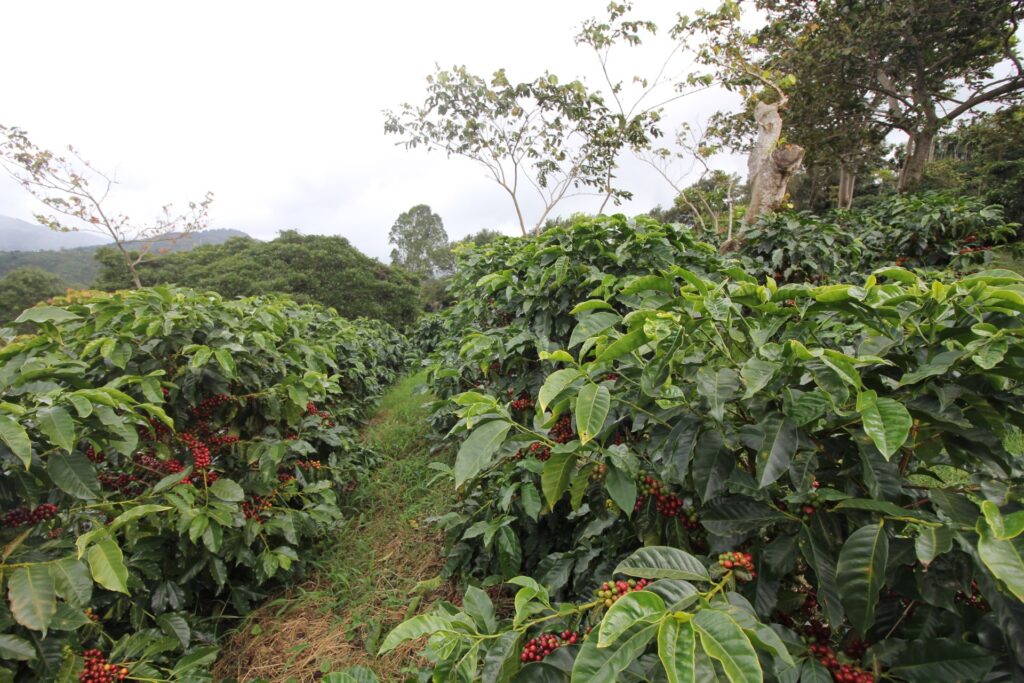
Through decades of innovations, Howell has perfected the process, from sourcing to freezing to roasting. His collaborations with growers and their families, sometimes multi-generational, have helped them produce quality coffee, make a good livelihood, and share their coffee around the world.
George Howell Coffee is available at five locations in the Greater Boston area and The Roastery in Acton. It can also be found locally at the Thinking Flower in Boxborough and Idlywilde Farm in Acton. Purchases may be made online and shipped or picked up at the store Monday through Friday from 9 to 4.
Nancy Knoblock Hunton is a volunteer writer for the Acton Exchange, specializing in profiles of people who have made contributions to the community.