Members of the Theater and Concert interest group from the Acton Woman’s Club attended an afternoon tea and lecture held inside the historic Wright Tavern in Concord on May 24. Local historian Amy Cole spoke about the history of ladies’ afternoon teas and how they helped to advance issues of interest to women.
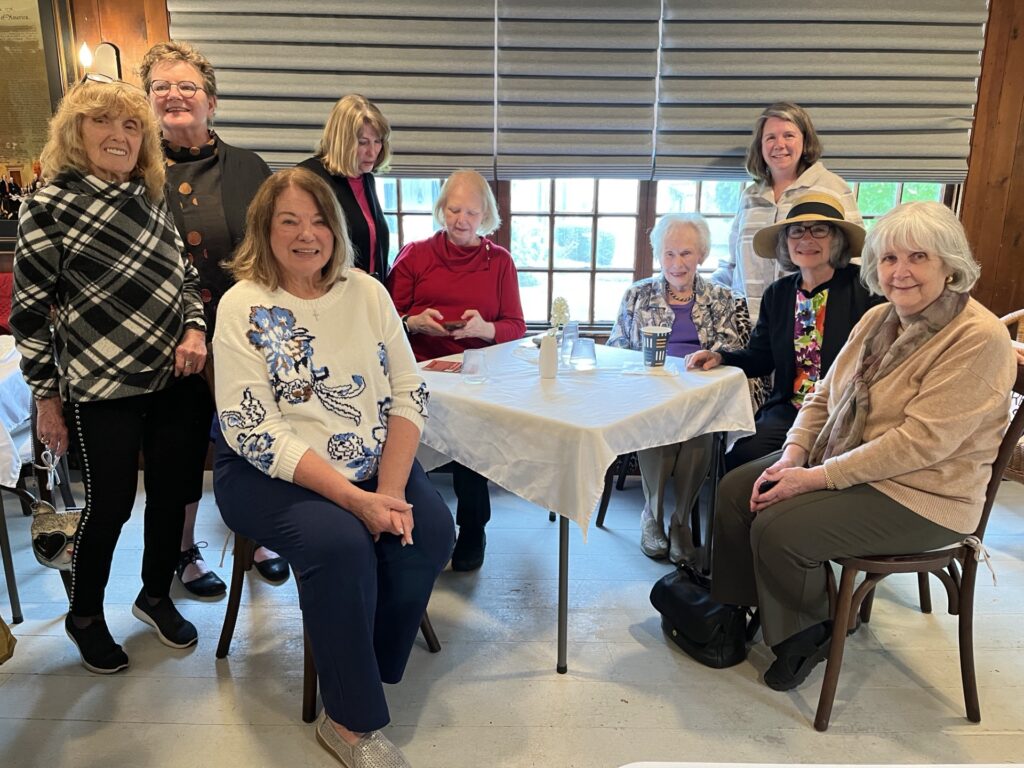
Setting the appropriate mood, “Afternoon Tea at the Wright Tavern” included a delightful assortment of tea sandwiches, freshly cut fruit, crudités, and a selection of baked sweets and pastries. Wine, beer, Prosecco, non-alcoholic beverages and of course a variety of teas were also available.
While her audience enjoyed the refreshments of afternoon tea, Ms. Cole gave an informative, and sometimes amusing talk about the history of ladies’ afternoon teas, which began in the late 1800s to early 1900s. They became especially popular in the 1920s by attracting women tourists who had acquired that new mode of transportation, the automobile.
Ms. Cole pointed out that most people do not know the actual meaning of “high tea.” She explained that the working class at the time had established “high tea” to be taken between 5 and 6 p.m. This was a hearty meal that included the wildly popular tea and was consumed at a functional dining table, one that was “higher” than the elegant low tables used at afternoon teas, which served lighter, more delicate fare. Therefore, the term “high tea” comes from the height of the tables used by the working class in the 19th century, and is not related to modern high teas, which are luxury events that often include champagne when offered on special occasion menus.
Attendees of the “Afternoon Tea at the Wright Tavern” also learned from Ms. Cole that tiered serving trays were developed in the early 1900’s as a space saving device, and that the tea bag was invented in 1908.
Members of the Acton Woman’s Club in the audience recognized Ms. Cole’s description of women’s clubs that started forming around the same time as ladies’ tea rooms, and with the same purpose: to discuss and promote issues of interest to women. We were then pleasantly surprised when she cited as a local example the Acton Woman’s Club and our 110th anniversary celebrations last year, which coincided with many America 250 celebrations! Appreciative applause ensued.
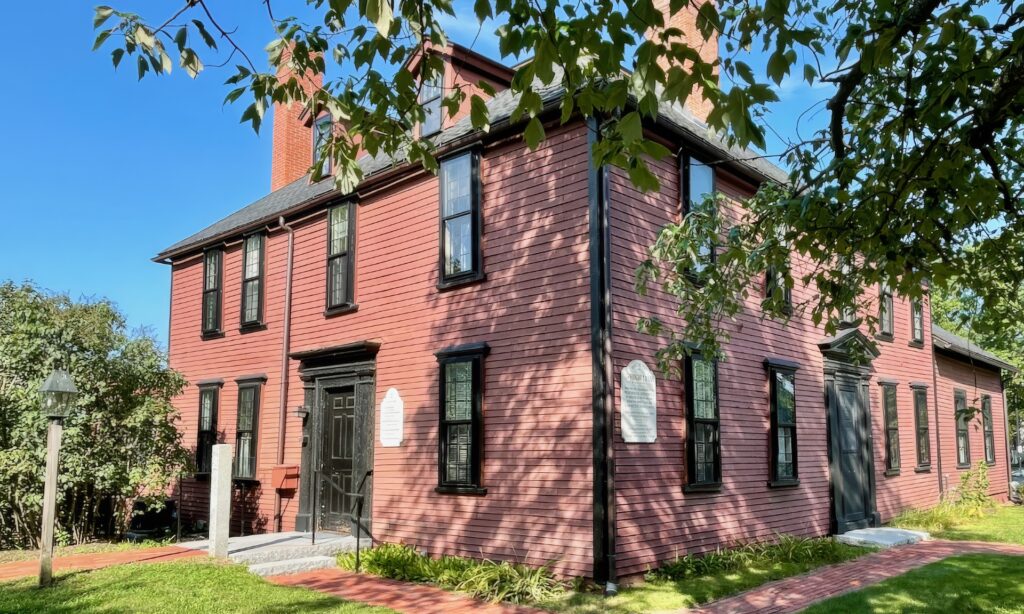
Wright Tavern was built in 1747 and is one the few local buildings that look nearly as it did in Colonial times. Descriptions of local historic events that took place there are posted in each room. Visitors can imagine standing next to one of the daughters or sons of the American Revolution as she or he talked about and performed acts of rebellion.
During the mid-19th century, the building housed a kindergarten whose students famously wrote to President Abraham Lincoln petitioning him to free all slave children. And President Lincoln wrote back! A copy of his letter to the kindergarteners can be viewed in the gift shop, which is located in the same room where the kindergarten was held.
For more information about the Wright Tavern, its history and program of events, please visit https://www.wrighttavern.org/.
For information about the Acton Woman’s Club, please visit https://theactonwomansclub.org/.
Joan Milnes is a member of the Acton Woman’s Club, a retired director of college internships and career services, and a former food columnist for the Beverly Citizen. She and her husband live in Acton.