February 5, 2026: Four student teams — two junior high school teams and two high school teams — presented creative, sustainability-focused solutions to local flooding challenges at Danny’s Place in West Acton, marking the culmination of the Acton Flood Solutions Hackathon.
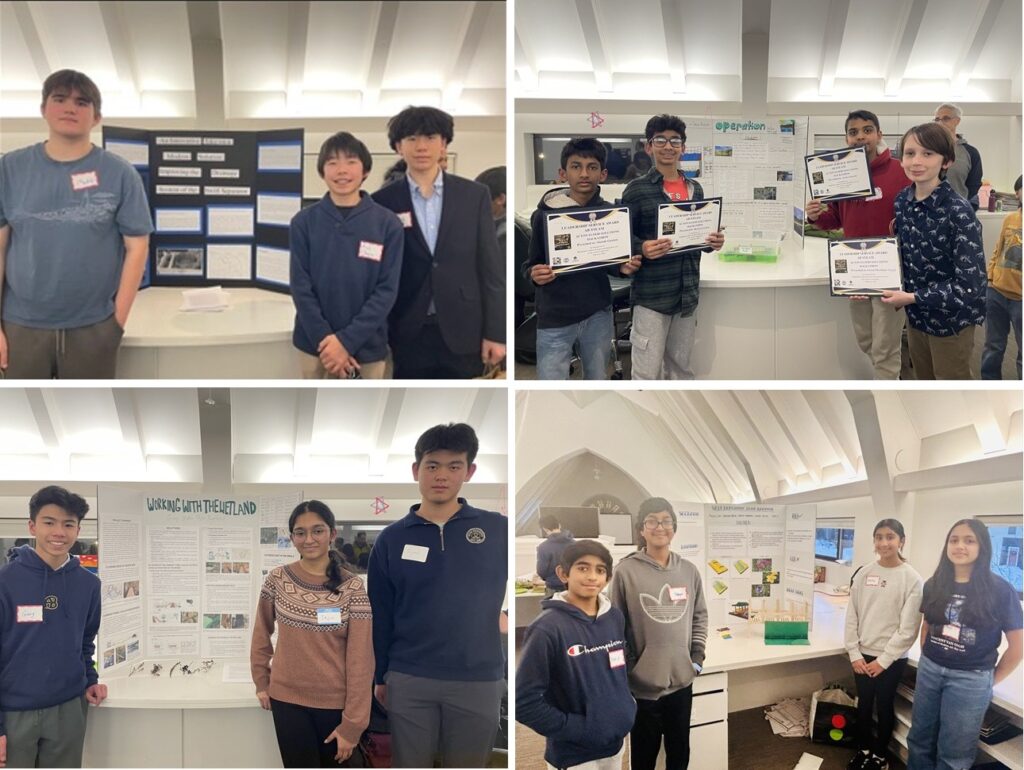
Hosted by AB STEAM (Acton Boxborough Science Technology Engineering Art Math) in partnership with the Town of Acton and local sustainability organizations, the months-long hackathon program challenged students to address flooding in Acton in ways that are economical, sustainable, and socially and environmentally responsible. Unlike traditional short-format hackathons, this program spanned roughly six months, giving students time to research, collaborate, and refine their proposals using local data and real-world conditions.
The Hackathon launched last summer with a walking tour of flood-prone areas in Acton, including conservation lands and public trails affected by stormwater and seasonal flooding. That early exposure helped base student projects in the realities of Acton’s landscape and inform the scenarios teams ultimately chose to address.
Student-Led Solutions Rooted in Ecology and Design
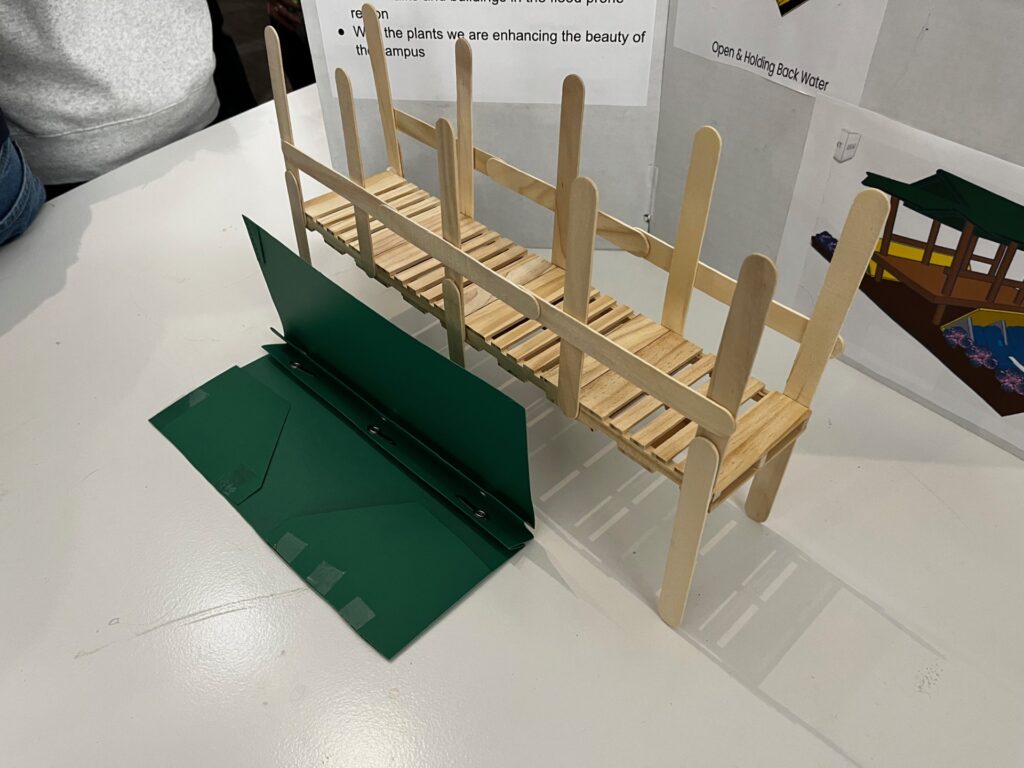
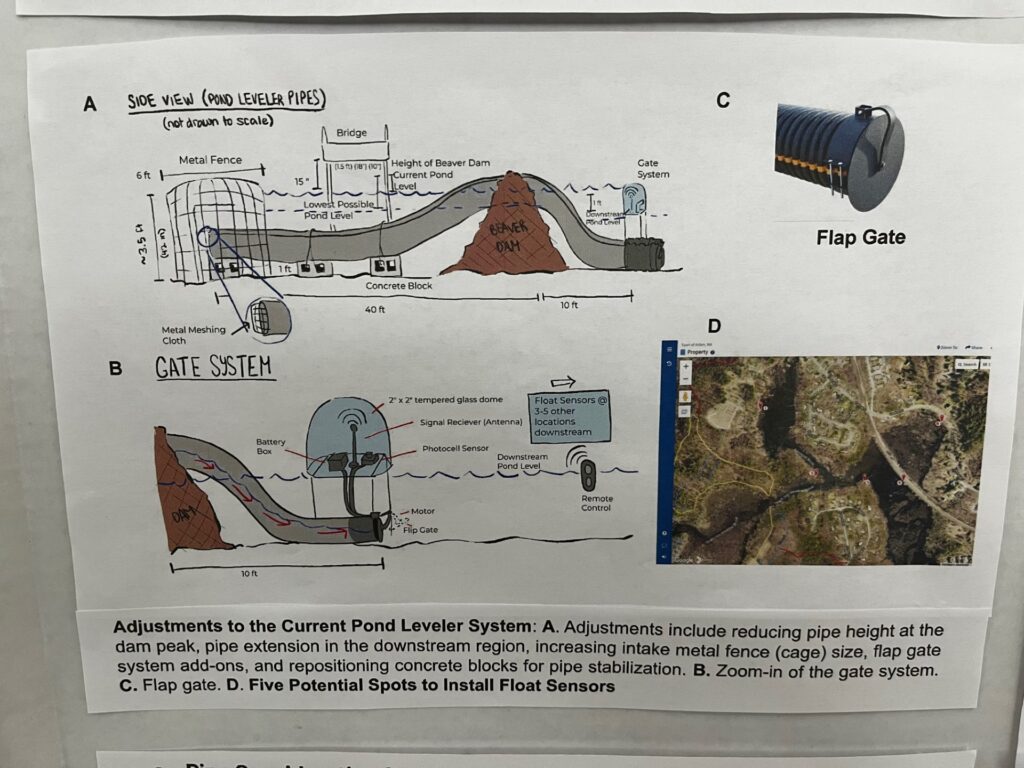
During the showcase, each team presented its final project through posters, models, and visual displays, explaining both the flooding problem they selected and their proposed solution. While each approach was distinct, all four teams demonstrated a shared emphasis on working with natural systems rather than against them.
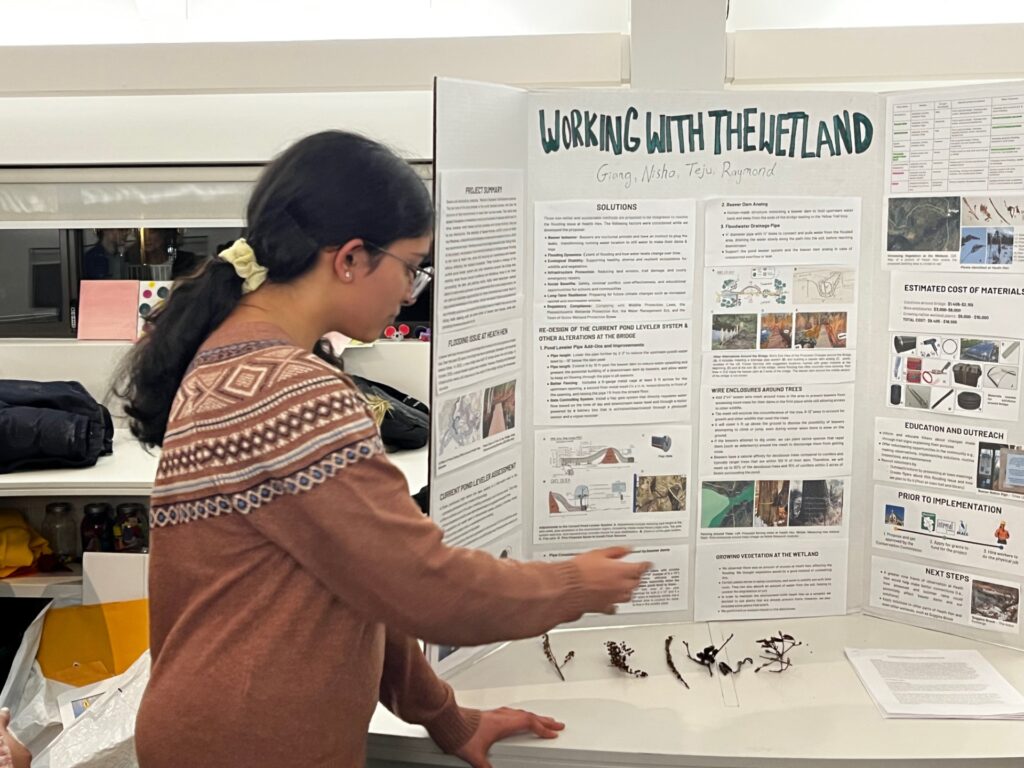
Across grade levels, students incorporated ecological and biodiversity considerations, along with careful attention to the sustainability of materials and long-term environmental impacts. Proposed solutions drew on existing flood-mitigation technologies and strategies, modifying them to better suit Acton’s specific conditions and conservation priorities.
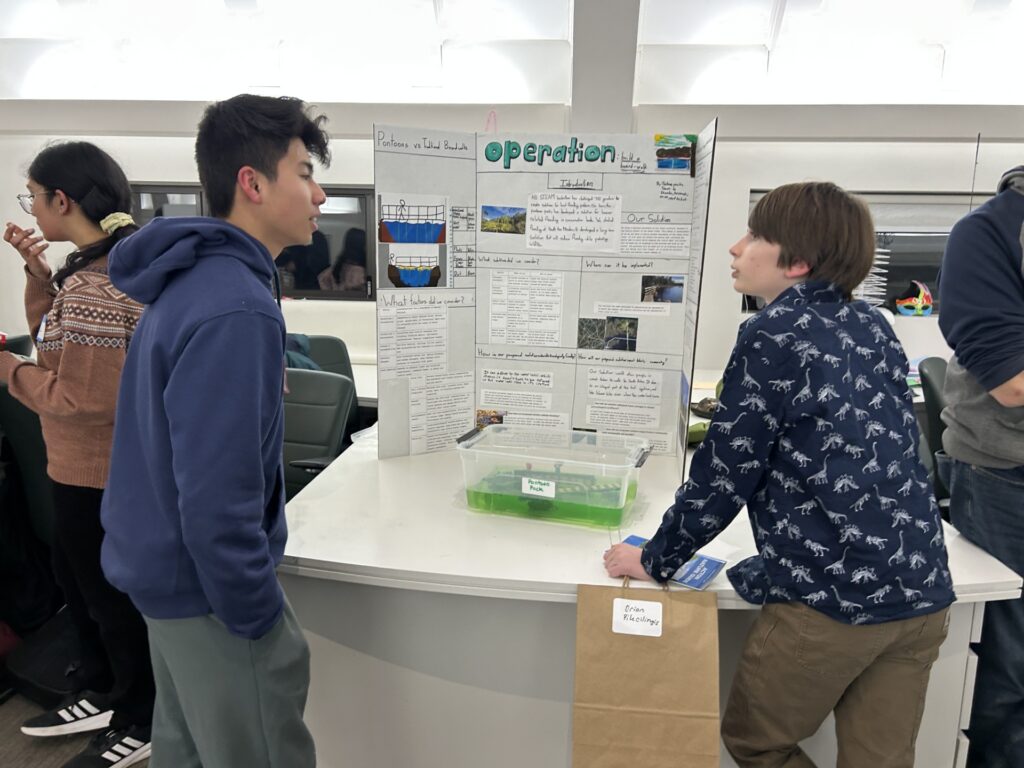
Evaluator Brewster Conant, Jr., a hydrogeologist and member of both Green Acton and Energize Acton, praised the students’ ability to adapt proven ideas in thoughtful ways.
“All of the projects took existing technologies and were able to create interesting modifications to try to address each issue,” Conant said.
Several teams focused on slowing, redirecting, or absorbing stormwater in ways that reduce flooding while preserving surrounding habitats, reflecting a strong understanding of systems-based environmental problem-solving.
Balancing Flood Mitigation and Conservation
Ian Bergemann, the Town of Acton’s Community Conservation Specialist and a mentor for the student teams, emphasized that the projects aligned closely with the Town’s broader conservation values.
“We deserve to co-exist together with nature,” Bergemann said, noting that the student proposals consistently found ways to address flooding without harming the environment around flood zones.
That balance — protecting public access and infrastructure while maintaining ecological health — is a central challenge identified in Acton’s planning documents, which note flooding as the most likely natural hazard facing the town in the coming years due to climate change and increasingly intense rain events.
Youth Voices in Local Climate Resilience
The evening event brought together students, families, mentors, and community members, offering attendees the opportunity to ask questions and engage directly with the presenters. Students spoke about the research process, the challenges of balancing cost and environmental impact, and the importance of designing solutions that could realistically be implemented at the municipal level.
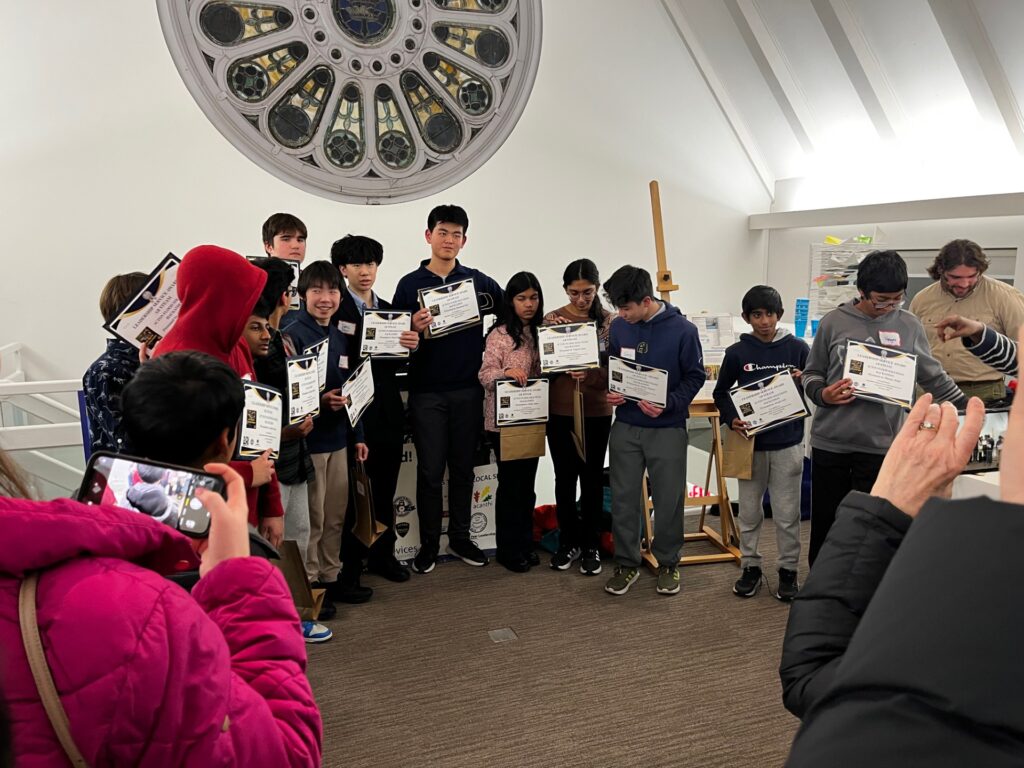
The event concluded AB STEAM’s DiscoverSTEM auction, which raised about $1,400 to support future STEAM programming and local student clubs. Donations to support AB STEAM’s ongoing work are still being accepted: https://www.zeffy.com/en-US/donation-form/donate-to-ab-steam-discoverstem2025.
As Acton continues to explore strategies for climate resilience and flood mitigation, the night’s presentations highlighted the value of engaging young people in community-based environmental problem-solving, and the creativity, care, and insight they bring to complex local challenges.
Susan Greene is an environmental science consultant, sustainability blogger, and grant writer based in Acton, MA. She is the founder of GreeneUP, a platform that explores sustainable living, climate issues, and community resilience.