As the daylight increases, days become warmer, and the snow and ice melt, we look for the coming of spring. There are some things that can be done this month, weather permitting.
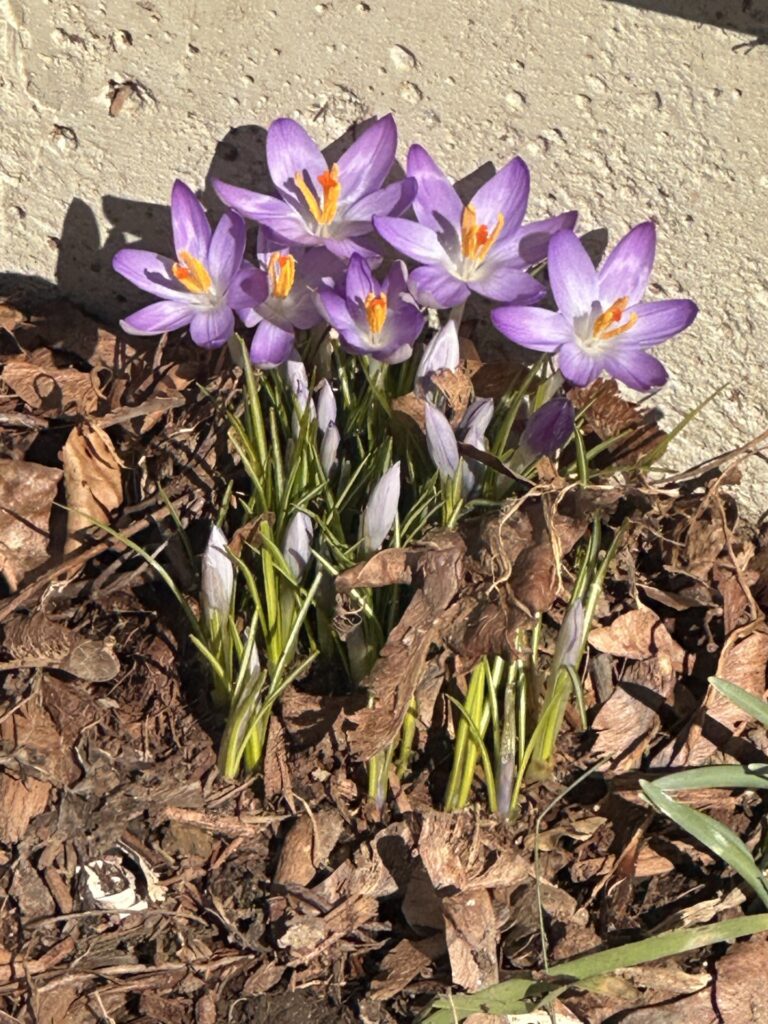
Bring color indoors
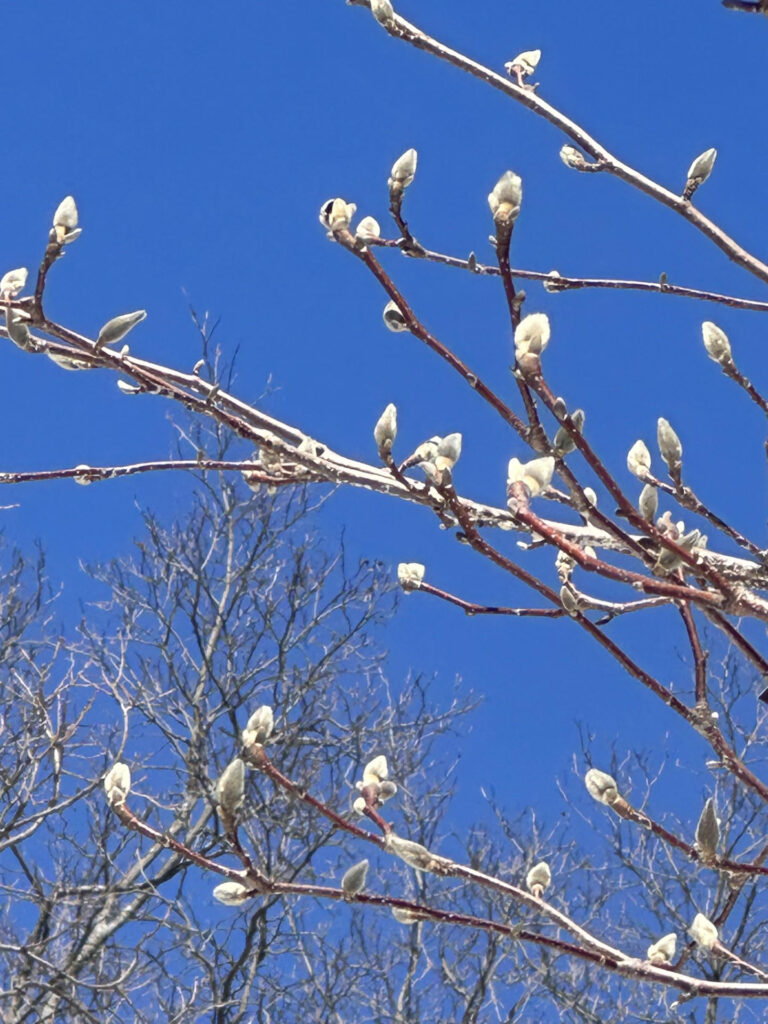
To bring color indoors at this time of year, force branches of any number of woody shrubs such as flowering quince, flowering cherry, forsythia, magnolia, crabapple, pussy willow, bush honeysuckle, serviceberry, fothergilla, redbud, witch hazel or red maple. Bring the cut shoots indoors and place them in a vase of water in a cool location; replace the water every couple of days. Shoots should flower in 1-3 weeks. Others, like crab apple and magnolia, may take 4-5 weeks.
Be careful with wet soils
Wet soils in March are susceptible to compaction by heavy equipment, materials, or foot traffic. Compacted soils will have poor drainage and water infiltration. Compacted soils impede root growth and may become anaerobic, limiting plant growth. Plywood sheets will help distribute the weight of heavy equipment or materials.
Lawn care tips
Be mindful that foot traffic can cause compaction of wet soil resulting in poor growth of turf grass. Repair damaged turf before the grass resumes growth. Repair areas that were damaged by snow removal equipment. Use a landscape rake or leaf rake to fix areas damaged by voles and moles. A vigorous raking is helpful to remove turfgrass foliage that has become matted or damaged by snow molds.
Trim ornamental grasses
Cut back ornamental grasses of any size, giving them a hard trim right to the ground before the new growth begins.
Pruning
March is a good time to prune trees, shrubs and perennials.
Prune trees by removing dead and crossing branches and shaping for good structure. Remove browned leaves of rhododendrons but be careful in removing branches since there may be viable leaf or flower buds. Damaged leaves will fall off naturally with a few hard rains, and the stems will re-leaf. Prune butterfly bush, smoke tree, caryopteris, holly, yew and the blackened branches of colored-twig dogwood.
Shear any perennials left standing last fall, such as epimedium and sedum. Trim browned leaves from hellebores early.
Test your soil
Have your garden and lawn soil tested this month to see if any amendments are needed. Go to soiltest.umass.edu for complete information on taking and sending a sample to the UMass Soil Testing Lab. The soil analysis tests for pH, major and micronutrients, and lead. It provides recommendations based on what is being grown.
House plant housekeeping
Do some housekeeping on indoor plants. Use a soft, moist cloth to remove any dust from foliage plants, as dust can hinder photosynthesis. Pinch back shoots on plants such as geraniums and coleus that may have become leggy due to lower winter light conditions. Check frequently for insect pests and watering needs as day length and sunlight intensity increase. Fertilize plants showing new growth with a water-soluble or slow-release fertilizer. Begin repotting pot-bound plants as needed.
Prep your garden tools
If you have not done so this winter, clean, disinfect, and sharpen loppers, pruning shears, and handsaws. Since bleach can corrode the metal blades of pruning tools, use a strong household cleaner instead, such as Lysol at full strength. It can be effective and less corrosive.
Note: If you have questions about how to prune a particular plant, check books that are available at the library or for purchase, such as The Pruning Book by Lee Reich.
Judy Dembsey is chair of environmental education for the Acton Garden Club.