If you’ve ever wondered whether Acton is still a smart place to put down roots, Boston Magazine’s latest research provides food for thought. In a February 2026 feature titled “The Most Affordable Top Towns in Greater Boston Right Now,” staff writer Brittany Jasnoff identified Acton as one of only five communities out of 141 evaluated across Greater Boston that earned strong marks in nearly every quality-of-life category while keeping median single-family home prices below $1 million.
Acton ranked third on that list, with a median single-family home price of $950,000 and an overall score of 6.26. For context, the top five most desirable towns in the magazine’s full ranking all carry median prices above $1.9 million. Acton, by that measure, is a relative bargain.
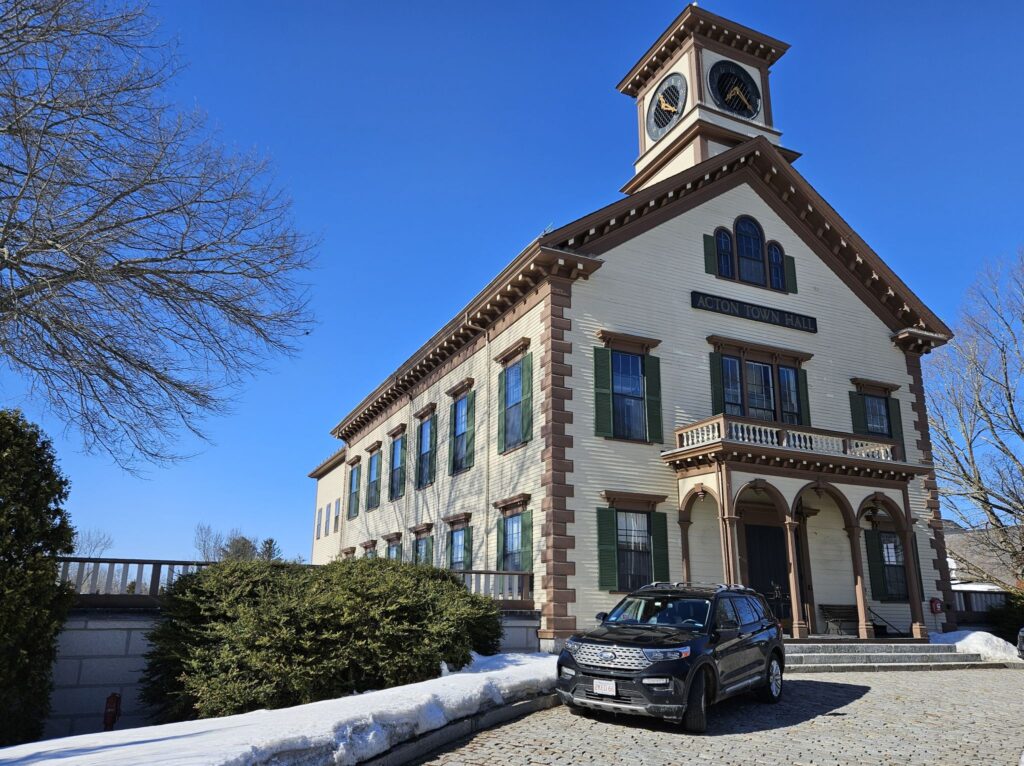
What Boston Magazine found
Jasnoff’s article notes that Acton sits at the end of a string of affluent Route 2 communities, including Arlington, Belmont, Lexington, Lincoln, and Concord, that are increasingly out of reach for many buyers. Acton, she writes, comes as “something close to a miracle: a community with many of the same qualities, but relatively cheaper real estate prices.”
Jasnoff quotes Acton-based Realtor Jennifer Jones of Barrett Sotheby’s International Realty: “By the time you hit Acton, you will get more bang for your buck. You’ll get more land, you’ll get access to the commuter rail, and you’re going to get great schools.” Jones adds that it’s possible to find a four-bedroom, two-bath home for under $900,000.
The article also highlights an encouraging data point for prospective buyers: Acton home prices dipped nearly 5 percent compared to the prior year, making this an especially favorable moment to enter the market. The magazine’s researchers evaluated towns on a composite of factors including safety, mobility, education, entertainment, and housing.
What makes Acton worth it
The Boston Magazine piece singles out several qualities that Acton residents will recognize immediately: abundant green spaces, the character and convenience of West Acton Village’s independent shops and restaurants, and access to the MBTA commuter rail. These aren’t just nice amenities; they’re among the primary reasons families choose Acton over cheaper alternatives with less to offer.
The broader context: A competitive field
It’s worth understanding what company Acton is keeping on this list. The other four towns Boston Magazine identified as top affordable options for 2026 are North Andover (median price: $945,000; score: 6.30), Sharon ($860,000; score: 6.44), Swampscott ($892,000; score: 6.20), and Walpole ($792,500; score: 5.89). Each has its own strengths — Sharon’s commuter rail proximity to Boston, Swampscott’s coastal setting, Walpole’s strong schools and downtown character.
Notably, Acton’s overall score of 6.26 places it competitively within this group, and its northwest-of-Boston positioning offers something the others don’t: direct access to the same Route 2 corridor that makes Lexington and Concord perennially desirable. For buyers who work in the tech corridor — Route 128, Route 495, or Cambridge — Acton is often a logical choice.
In addition to having competitively priced single family houses, Acton has other housing options, including multi-family buildings with rental apartments and condos. Roughly 24% of Acton’s housing are rental units, which increases the accessibility of housing options.
What this means for current Acton residents
For those already living in Acton, this kind of coverage matters in two ways. First, it validates what we already know: the town’s combination of schools, open space, civic life, and location draw new residents. The town enjoys sustained community investment and engaged local governance.
Second, it’s a signal worth paying attention to. Boston Magazine’s point — that Acton “hasn’t been fully discovered yet” — suggests the town’s relative affordability advantage may not last indefinitely. If wider attention drives demand, the price gap with neighboring communities would narrow. That makes now a particularly interesting moment for anyone weighing a move to Acton, or for current residents thinking about long-term property values.
For now, though, the data is positive. Acton continues to offer the quality of life associated with some of New England’s most desirable suburbs without requiring the kind of price tag that has put those communities out of reach for most families.
Reactions of local officials and business leaders
Local officials and business leaders were asked to comment on Boston Magazine’s latest research.
Dean Charter, chair of the Acton Select Board, said, “Acton has always pursued a very fiscally conservative path, and has maintained a triple A bond rating for many years, so we save on all of our borrowing. Our voters are very prudent and deliberative in approving new projects and programs, and having an Open Town Meeting gives all the citizens an opportunity to weigh in on expenditures. We also have always seen the value of paying good salaries to retain top-notch staff.”
Tori Campbell, chair of the Acton-Boxborough Regional School Committee, said, “Our schools are some of the very best in the state, while spending less per student than the state average. Maintaining that excellence requires proactive, collaborative governance and a community that is deeply engaged in shaping the future of its schools, as ours has proven to be throughout the AB Forward reorganization process.”
Annette M. Lochrie, owner of Purveyor of Promotional Products (POPP) and secretary/clerk and board member of the West Acton Merchants Association (WAVMA), said, “We never pass up an opportunity to sing the praises of our charming, historic West Acton Village … with its variety of shops, stores, businesses, schools, and churches.”
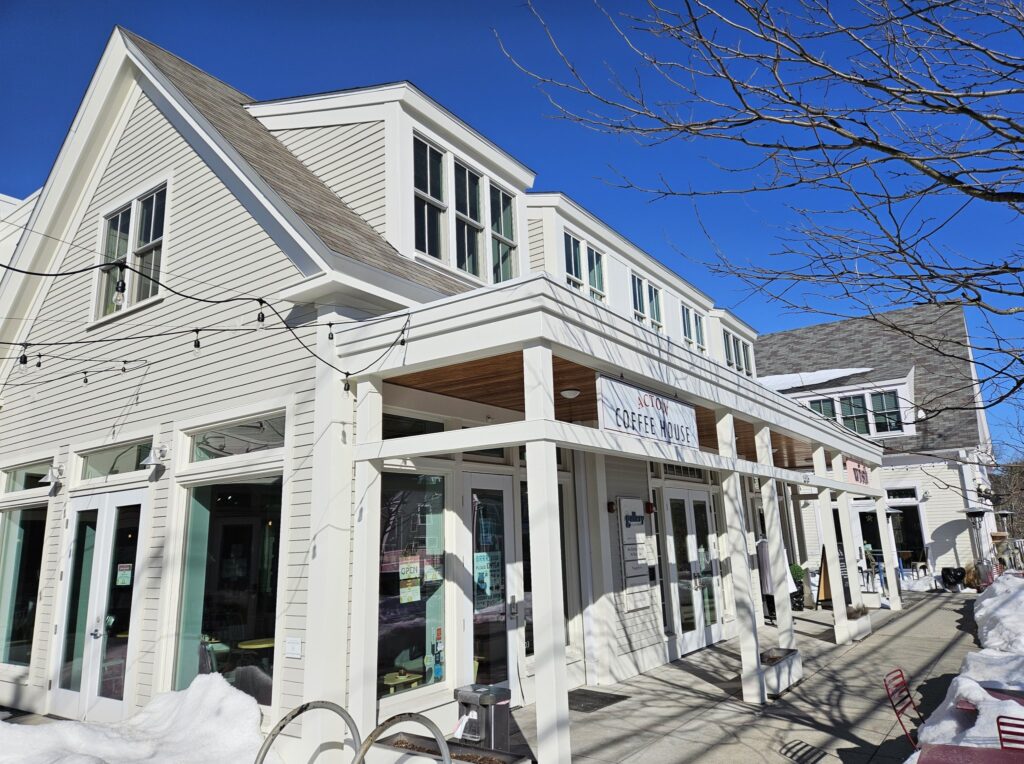
“With an active professional group of 45 businesses, the WAVMA runs events several times a year, including the December Village Stroll, May Spring Fling, and late-September Oktoberfest, all with the objective of encouraging visits to, and exploration of, all that West Acton Village has to offer.”
Greg Jarboe is a member of the Town of Acton Finance Committee, and writes for the Acton Exchange on various topics of community interest. He has authored previous Acton Exchange articles about how Acton compares with other towns: In Acton is still one of the best suburbs in Massachusetts to live in, he documented how Acton consistently ranks near the top of statewide quality-of-life comparisons, drawing on school performance, civic engagement, and housing data. In his BACKGROUNDER: Acton’s changing population, he noted that Acton’s demographic profile plays a role in its long-term appeal. He detailed the town’s “meaningful growth in its diversity — including a large and well-established Indian American community — and its strong civic participation that gives Acton its reputation as a genuinely engaged community.