April
April 16: A dozing FISHER awakens on a wooden platform in N. Acton and walks into the woods.
April 17: MAGNOLIA trees flower on Windsor Avenue.
April 20: DAFFODIL blooms peak in W. Acton yard.
April 21: Invasive GARLIC MUSTARD yearling plants start to form flower buds in Acton Arboretum, Jenks Conservation Area, and many other locations around town, spurring pickers to accelerate eradication efforts ahead of seed drop in June.
April 28: BOBCATS (or the same one twice) appear on two N. Acton trail cameras.
May
May 1: A pair of BROWN-HEADED COWBIRDS invades a PHOEBE nest in an Acton Center yard, but rightful owners fight them off. The cowbirds return later, vengefully breaking open the eggs. The phoebes search the yard for a safer location.
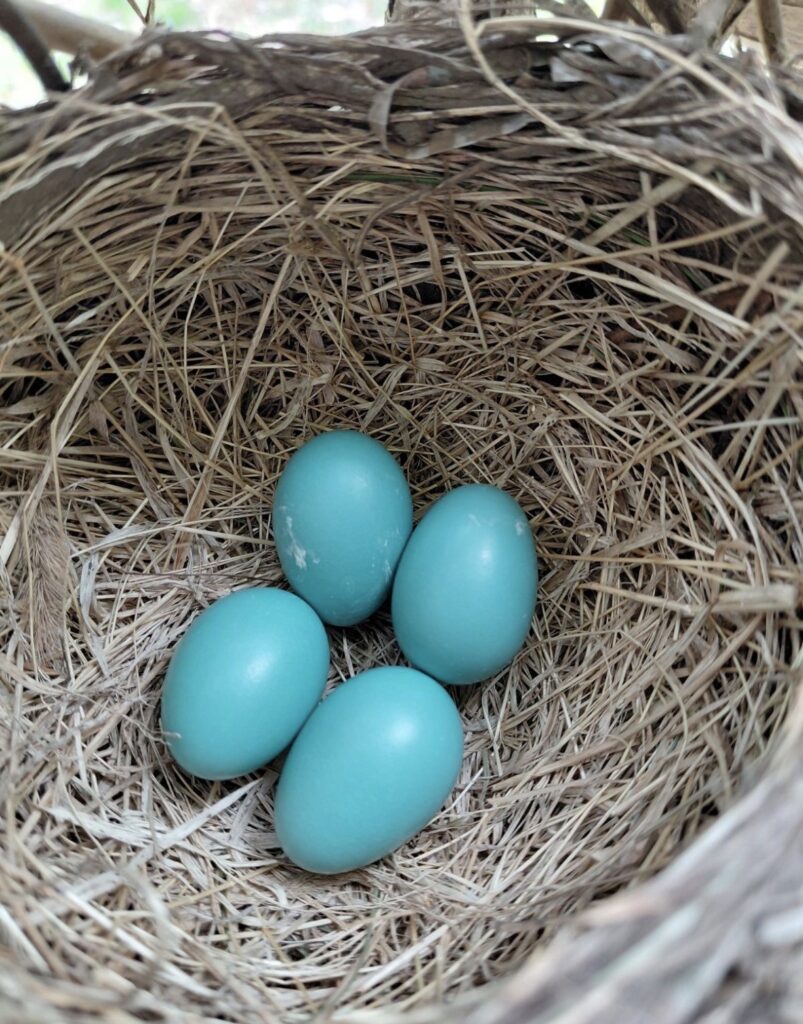
May 3: Four ROBIN EGGS fill a nest built on an Indian Village porch, their blue color protecting the embryos from ultraviolet light.
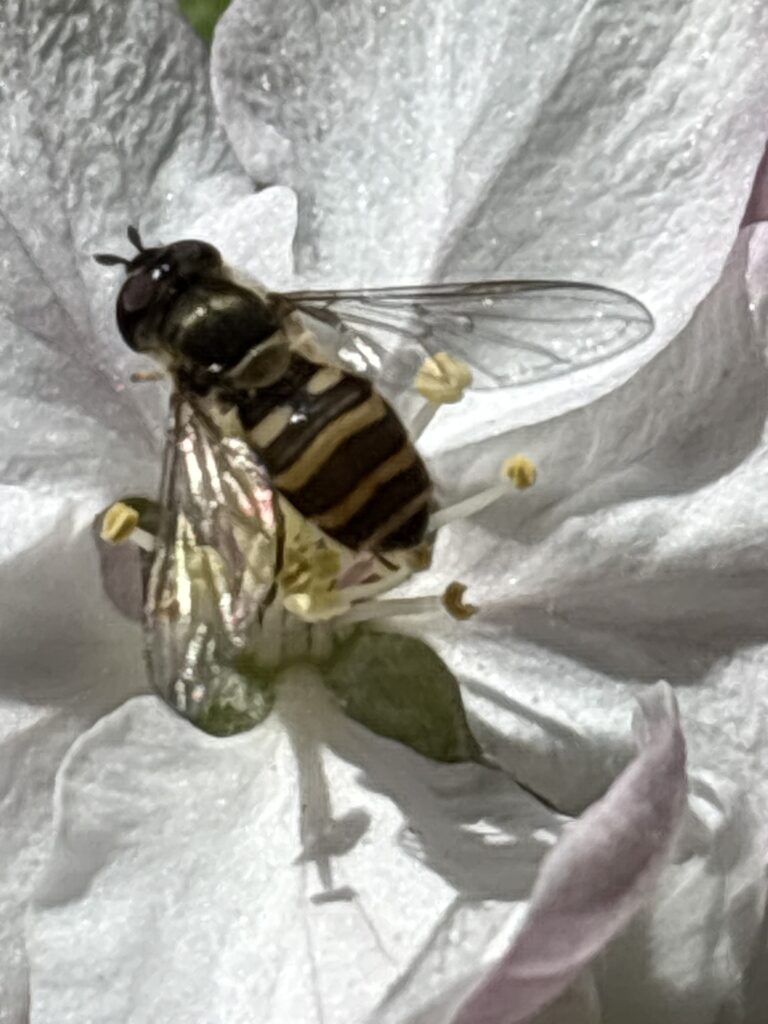
May 4: A COMMON FLOWER FLY lands on an APPLE blossom, spreading pollen among the trees in a W. Acton yard.
May 8: Four BARN SWALLOW nests appear on light fixtures over the West Acton Boardwalk, while a busy squadron of adults sweeps the skies for insects over Fort Pond Brook.
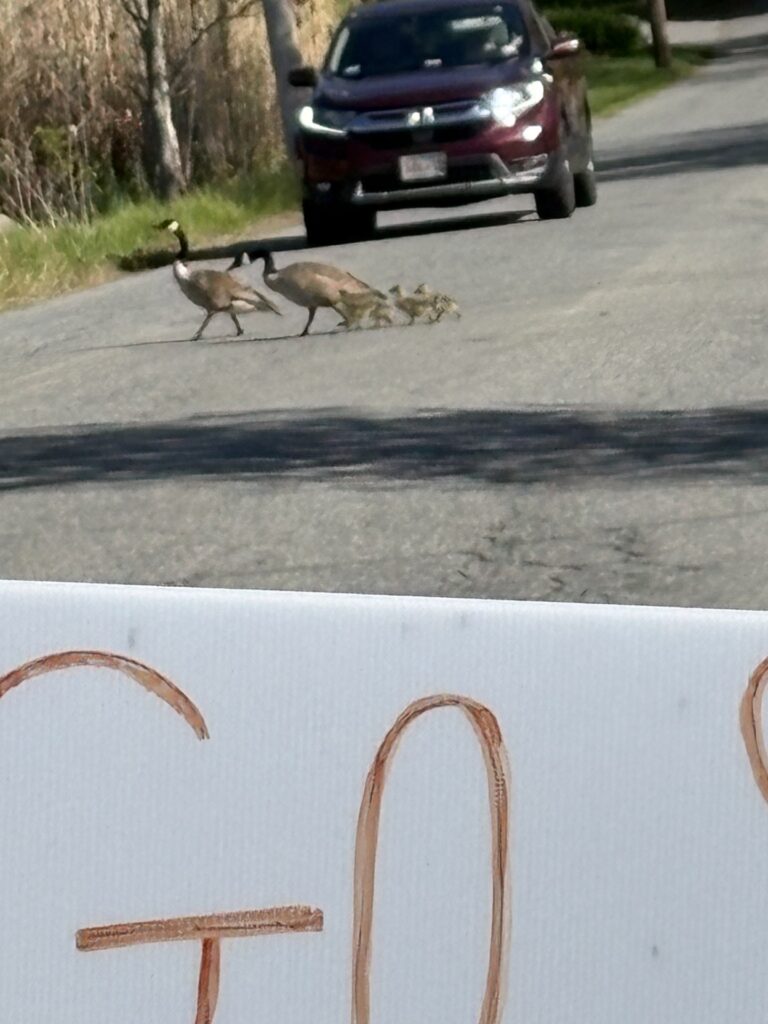
May 12: The distinctive song of a WOOD THRUSH floats through the woods along Charter Road…CANADA GOOSE family crosses the street safely, aided by “Go Slow” signs posted along Charter Road.
May 15: WHITE OAK and WHITE POPLAR catkins bestrew the deep green grass in a West Acton yard; cottony pappusses float across fields and streets; oak catkins ball up and roll across the entrance to the Boardwalk Campus School like tumbleweeds.
THANKS to Acton Nature Watchers Brewster Conant, Jr., Jim Snyder-Grant, and Peter Norton!
In the coming month, watch and listen for dragonflies, woodcocks, newborn mammals, fledgling birds, and more. Keep us posted! Submit your observations and photos to actonnaturewatch@gmail.com.
For information about making Acton less friendly to pests but safer for our raptors, attend Green Acton’s Biodiversity Committee meeting the third Thursday of every month at 7 p.m. For information about the agenda and how to connect, email biodiversity-contact@greenacton.org.
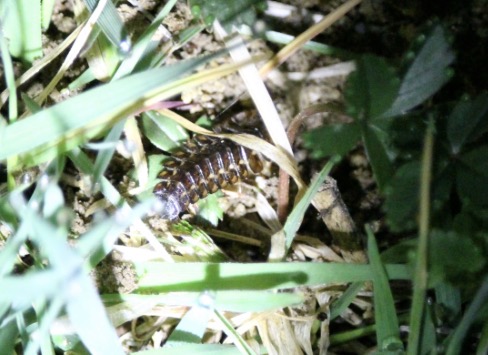
The sixth annual BioBlitz, NATURE OF ACTON AND BOXBOROUGH 2026, prompted 25 observers to make 934 observations of 434 species! Reptiles, including turtles and snakes; amphibians, including frogs and salamanders; birds, including great horned owls and returning warblers; fungi, including mushrooms and bird nest fungus; and insects such as millipedes and beetle larvae, were reported thriving in our towns. Unfortunately, the most sighted species was the invasive garlic mustard plant with 13 sightings. Thanks to all participants!
Rob Gogan is a West Acton resident and compiles the Acton Nature Watch feature. He is one of the organizers of Green Acton’s Biodiversity Committee.