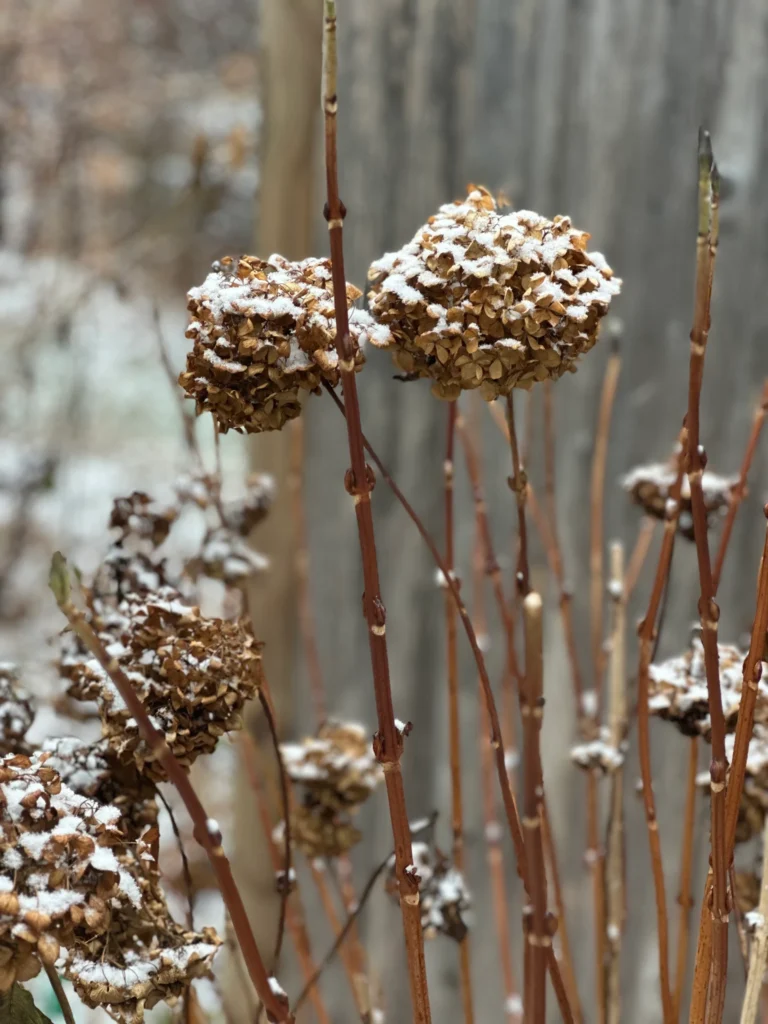
Winter is upon us and while we keep ourselves busy indoors tending our houseplants, sorting seeds, forcing paperwhites, amaryllis and daffodils, and planning our gardens for the spring, here’s a few thoughts as you gaze out the window to look at snow covered trees in your backyard.
A few ideas to take care of your January garden (both outdoors and in):
- Allow ice and snow to naturally melt from outdoor plants; branches are brittle and can break if handled at low temperatures.
- Avoid foot traffic on frozen lawns as this may injure turfgrass.
- Water houseplants deeply once a week. Do not fertilize until mid-February (then use a weak solution of fish fertilizer).
- Keep indoor plants on trays filled with pebbles and water to boost indoor humidity.
- Remove dead or discolored leaves from houseplants, and check for aphids, whiteflies and scale.
In a 2021 Garden Clippings article by Russ Norton, an agriculture and horticulture educator at Cape Cod Cooperative Extension provided the following information:
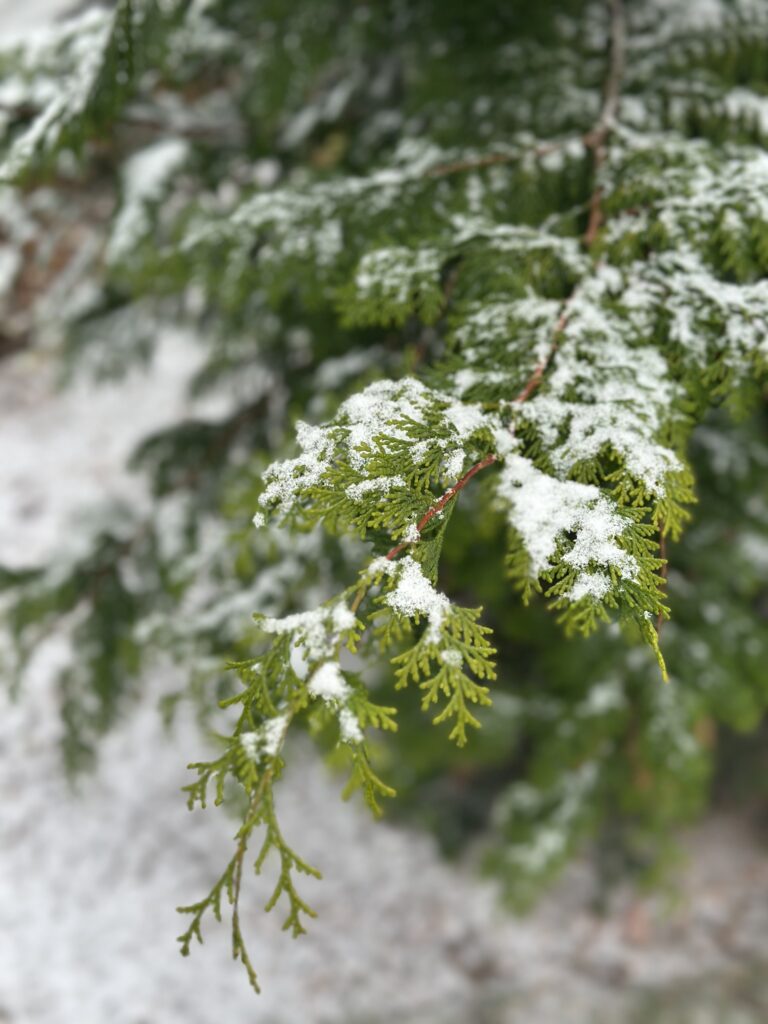
- Repurpose your Christmas tree. When it is time to take down the Christmas tree, cut off the boughs and use them for winter protection. The boughs can be laid over perennials and herbs, providing some additional protection from desiccating winds and drastic temperature fluctuations.
- Be careful when applying de-icers. De-icers can cause damage to landscape plants and to natural ecosystems through soil accumulation (runoff/salt laden piles) or aerial spray (road spray). Most de-icers are types of salts, some of which have a higher potential to damage plants than others. Sodium chloride has the most potential to damage plants, followed by calcium chloride. Potassium chloride and magnesium chloride have less potential to cause damage to plants, but it is still possible, especially with overuse. Pay attention to labeled rates and use as little as possible. Calcium magnesium acetate (CMA) is another option that is often used in environmentally sensitive areas. In areas where de-icing salt cannot be used, consider using materials that improve traction instead of melting, such as sand.
- Be on the lookout for rodent activity. Voles and rabbits often gnaw on the lower bark of thin barked trees and shrubs during the winter. This gnawing damage essentially girdles the plant. Look first at susceptible plants such as young fruit trees, roses, and creeping junipers. If damage is observed, consider protecting stems/trunks with a cage. Cages can be made from hardware cloth to exclude voles, and chicken wire can be used for protection against rabbits.
- Take a serious look at your winter landscape. Does it provide winter interest? If not, evaluate the potential to increase winter interest for next year. Providing wildlife habitat can be another winter consideration. Does your landscape provide cover and food for overwintering animals such as birds? Evergreens and shrubs with persistent berries can be extremely beneficial for these animals. Don’t overlook the simplest aspects such as postponing winter cleanup of perennial beds until spring. Grasses and other perennial seed heads provide some interest in the form of texture and provide some wildlife resources.
Judy Dembsey is the chair of environmental education and a member of the Board of the Acton Garden Club.