Winter is upon us and our trees. Cold temperatures, winter sun, and wind will dry out evergreen foliage, damage bark, kill or injure branches, and kill flower buds and roots. Salt used for de-icing streets, sidewalks and parking lots is harmful to landscape plants. Deer and rodents will injure and at times kill trees and shrubs as they look for food and feed on bark, twigs, flower buds and leaves.
Cold damage
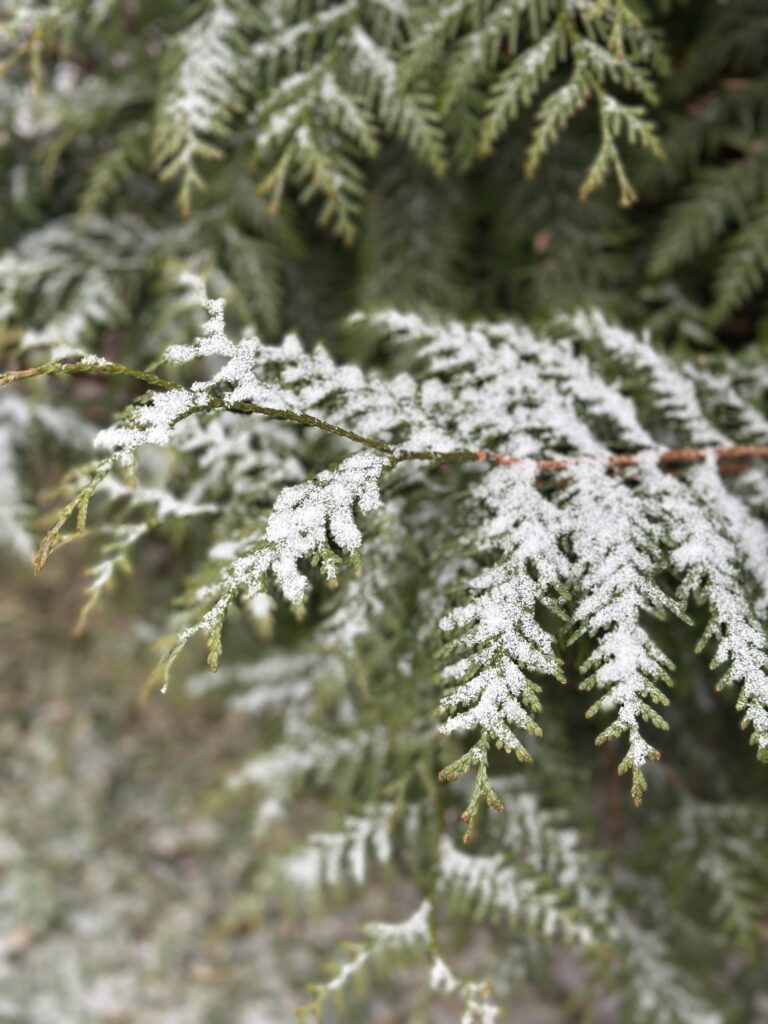
Trees and shrubs that are not in our USDA cold hardiness zone 5-6A are vulnerable to damage. Extreme winter conditions such as heavy snow, ice storms, wind, or prolonged sub-zero temperatures can break branches and fell trees. At the same time, a lack of snow is detrimental to plants as it provides insulation from wind and very cold temperatures.
Windbreaks
Evergreens, particularly broadleaf evergreens such as rhododendrons, are susceptible to drying out from the wind in the winter months. Even in cold weather, leaves and needles lose water in a process called transpiration. Water loss is greatest during periods of strong winds and mild sunny weather. In super cold temperatures, the ground freezes and cuts off the water supply to the plant’s roots. When water is transpired faster than it is taken up, the leaves begin to desiccate and turn brown.

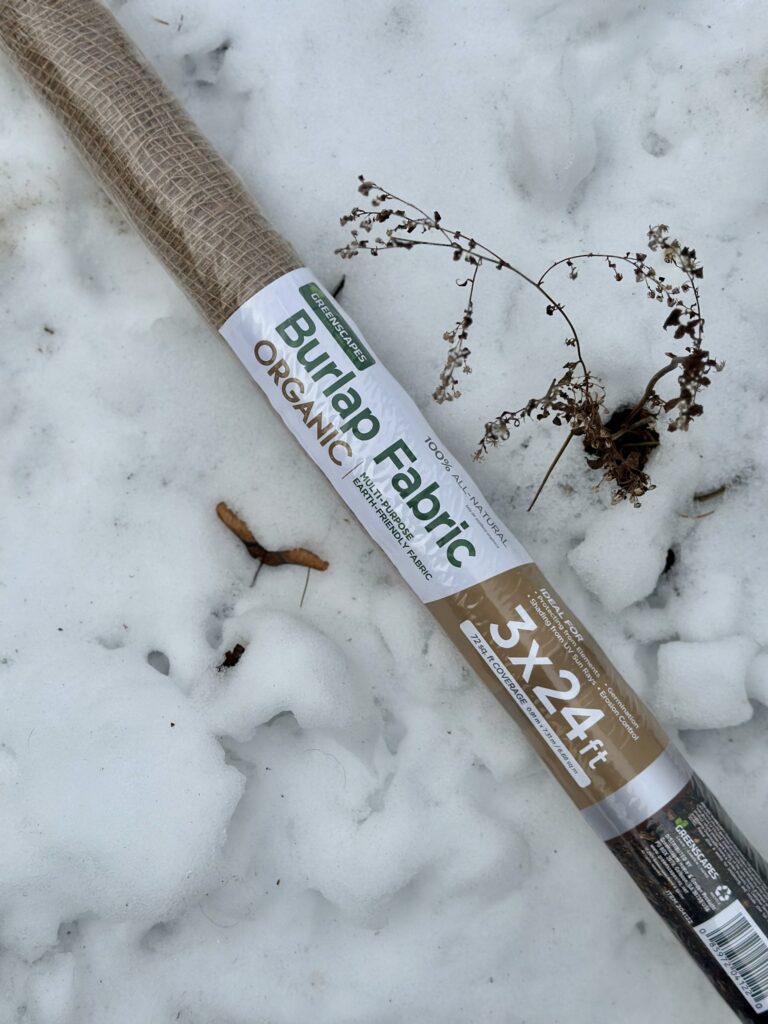
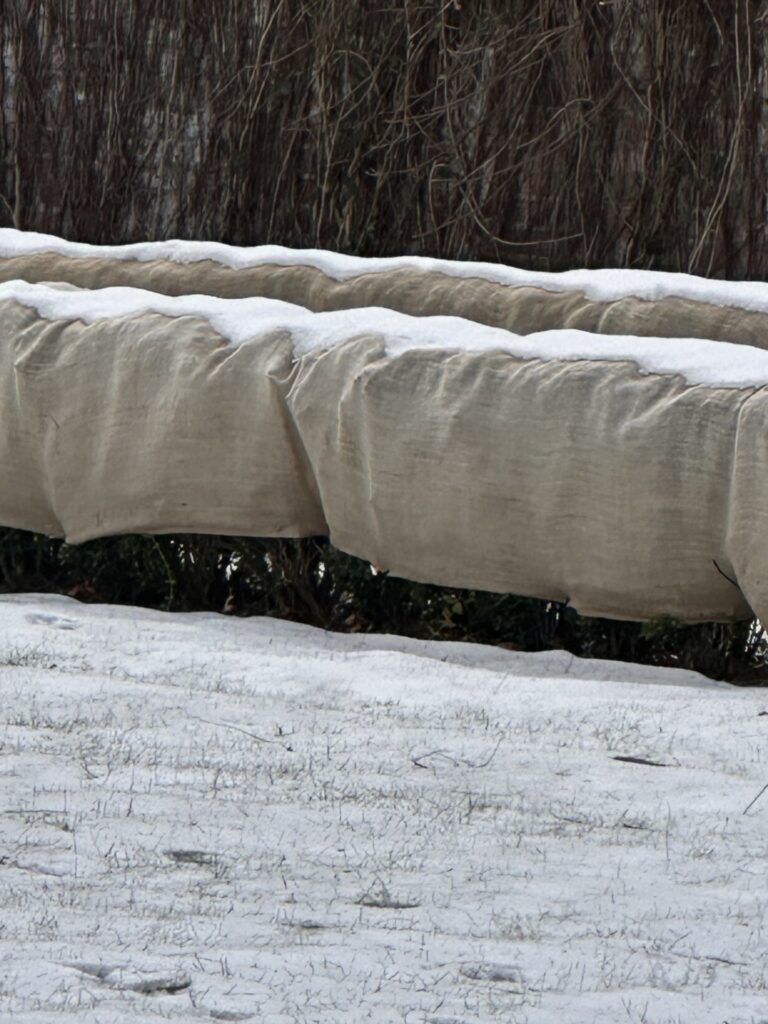
Desiccation can be mitigated by erecting windbreaks made from burlap or canvas attached to frames around the plants. Never use black plastic, as it causes extreme temperature fluctuations. Wrapping with burlap and building windbreaks isn’t always enough, so an anti-desiccant may be appropriate.
Using anti-desiccants
Anti-desiccant sprays can be used to protect evergreens from winter damage. There is evidence that anti-desiccants can be helpful when correctly applied when temperatures are around 40-50 degrees.
Because plants lose water through both the upper and lower surfaces of their leaves, all parts of the plant should be sprayed. Make sure not to apply it too early. Spraying anti-desiccants before plants are dormant increases the potential for damage. The spray can trap excess water in leaves, which can freeze and cause cells to rupture. Wait to apply until evergreens are fully dormant.
Winter Mulching
Woody plants, especially those newly planted, are more likely to suffer cold damage in winters where there is very little snow to protect their root systems. Apply at least two inches of additional woodchips or straw over the root zone, taking care not to pile mulch against trunks. Cut evergreen boughs can also provide good insulation.
Roots do not become dormant in the winter as quickly as stems, branches and buds. Roots are less hardy than stems. Soil temperatures normally are much higher than air temperatures; as a result, soil cools down much more slowly than the air. Moist soil holds more heat than dry soil, so frost penetration will be deeper, and soil temperatures colder, for sandy or dry soils. Snow cover and mulch act as insulators, keeping soil temperatures higher.
Deer Damage
When food is scarce in winter months, deer will heavily browse on some evergreen plants, including arborvitae (Thuja occidentalis) and yew (Taxus spp.). Installing fencing around plants susceptible to deer is the most effective method of protection but it may not be practical.
Repellents that trigger a fear response in deer are effective. Foul smelling products such as Bobbex or Liquid Fence generally contain putrescent egg solids, predator urine, or slaughterhouse wastes. Once the spray has dried on plants you cannot smell it but the taste repels animals.
Area repellents near affected plants, such as bar soap or garlic “sticks” can be used. These repellents are usually clipped or hung from the branches of trees and shrubs.
Even in the best of circumstances, repellents will never eliminate deer damage, but they can help. All deer-proofing methods work best when they are employed early in the season. Start applying repellents in the mid-to-late fall to discourage deer from making regular visits.
A few more pointers
- Even when you do everything you can to protect plants, winter damage is still a possibility. Some plants are simply better adapted to survive than others. Many winter injury issues can be solved by choosing appropriate plants, and hardiness is the first thing to consider. Trees and shrubs should be hardy enough to survive our 5-6A zone.
- Winter winds and sun can be extremely damaging to evergreens so they should be planted in protected spots out of the prevailing winds. Broadleaf evergreens should be planted on the north, northeast, or eastern sides of buildings, or behind barriers where they are protected from the elements.
- Usually at this time of year, local gardeners are advised to provide supplemental water to woody plants in weeks not receiving one inch of rainfall.” However, the regional drought is still ongoing, and the Acton Water District is still working on its PFAS treatment system, and so Acton is still under Outdoor Water Use Restrictions level 4: “No outdoor water use except for production of food and fiber, or public health and safety.”
- Be aware that, in the fall, when the air temperature drops below that of the soil, or freezing temperatures arrive, shoot growth ceases but roots continue to develop until the soil dips below 40℉.
Resources:
- Fact Sheet from the University of Minnesota Extension
- Fact Sheet from the University New Hampshire Extension
Judy Dembsey is chair of environmental education for the Acton Garden Club.