Acton has been seeing a small uptick in influenza cases, similar to the trend across Massachusetts, according to Health Director Penny Funaiole. The numbers in town remain low, but Funaiole says it’s still a good reminder for everyone to take precautions. It’s also important to remember that local disease surveillance data only reflects cases reported through medical providers. Many people use home tests or manage mild respiratory illnesses on their own, so the official numbers never capture the full picture. This is why staying home when you’re not feeling well, practicing good hygiene, and taking basic prevention steps continue to be so important.
Acton Pharmacy owner Saad Dinno said that just this week he has seen an increase in prescriptions for the antiviral flu medication Tamiflu. He offered advice about sleeping, drinking water, taking vitamins, and getting vaccines.
For the most complete and up-to-date information, Funaiole recommends following the State’s Respiratory Illness Reporting Dashboard, which offers a much more robust view of statewide trends throughout the season.
As the cooler weather approaches, colds, flu, and other respiratory viruses start circulating more widely. While you cannot completely eliminate the risk of illness, small, consistent actions can do a lot to help you and your loved ones stay healthy.
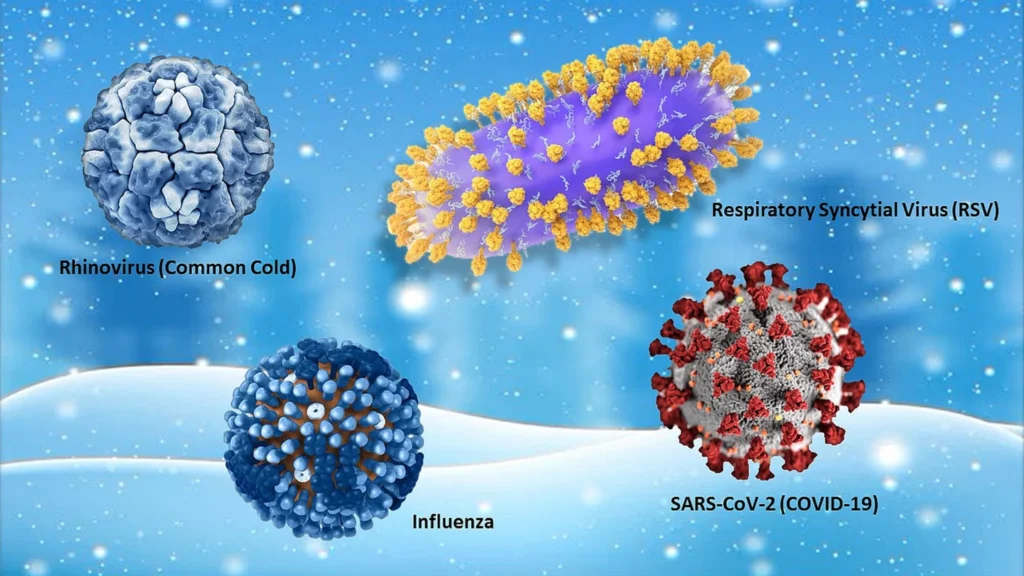
What’s the difference?
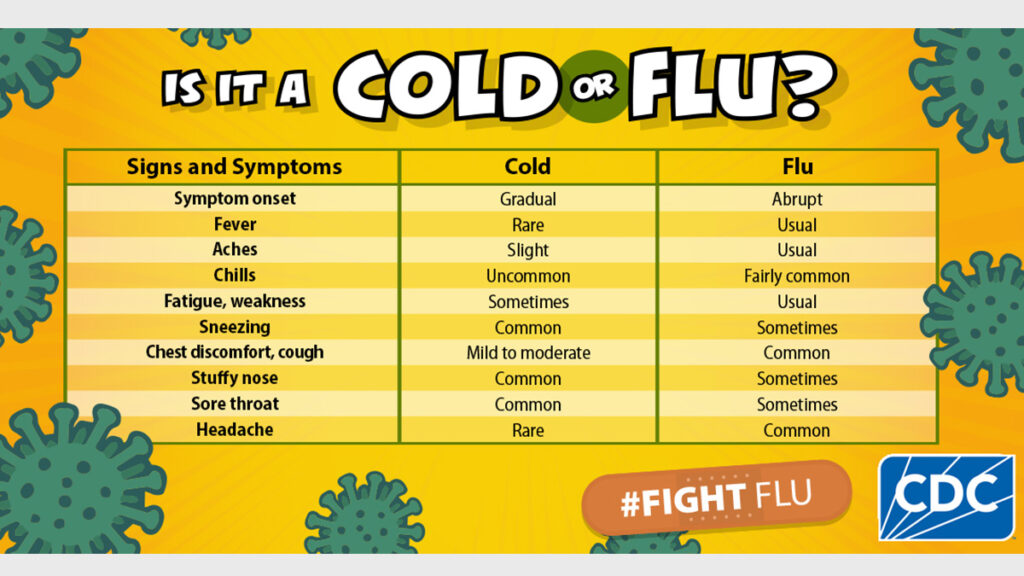
According to the Centers for Disease Control, “Influenza (flu) and the common cold are both contagious respiratory illnesses, but they are caused by different viruses. Flu is caused by influenza viruses only, whereas the common cold can be caused by a number of different viruses, including rhinoviruses, parainfluenza, and seasonal coronaviruses.” Artistic renderings of relevant viruses are shown above; the actual viruses are between 20 and 400 nannometers in size, less than 1/200 the size of a human hair.
Colds generally do not result in serious health problems, but flu can lead to serious associated complications. Vaccination can help protect you from flu, but there is no vaccine for the common cold.
Wash your hands, often and properly
Frequent handwashing is one of the most effective ways to stop the spread of germs. Use warm water and soap for at least 20 seconds, especially after being in public spaces or touching shared surfaces. If soap is not available, a hand sanitizer with at least 60% alcohol works well. Try to avoid touching your face –– eyes, nose, and mouth are common entry points for viruses.
Support your immune system
A strong immune system is your body’s best way to stay well. Focus on:
- Healthy eating: Incorporate fruits, vegetables, whole grains, and lean proteins for essential vitamins and minerals.
- Hydration: Drink plenty of water throughout the day to help your body function well.
- Sleep: Aim for 7-9 hours per night. Adequate rest helps your immune system fight off infections.
- Exercise: Even moderate activity, like walking, boosts circulation and overall immunity.
Practice respiratory etiquette
Cover your mouth and nose with a tissue or the inside of your elbow when coughing or sneezing. Dispose of tissues immediately and wash your hands afterward. Encourage those around you to follow this routine to reduce virus spread.
Stay up-to-date on vaccines
Vaccines, such as the seasonal flu shot, continue to be among the most effective tools for preventing serious respiratory illnesses. Keeping up with vaccines reduces both the risk of infection and the severity of illness if you do get sick.
Be mindful of exposure
Consider the following to protect yourself and those around you:
- Limit close contact with people who are sick.
- Avoid large indoor gatherings when possible.
- To reduce the spread of germs, wear a mask in crowded indoor spaces or when around people who are sick.
- Stay home if you feel unwell.
Improve ventilation
Open windows or use air purifiers to improve ventilation and reduce the spread of virus at home or work.
Get medical care when needed
Call your primary care provider if you have any health concerns. They will assess your health and provide a plan and medication if needed to help you recover. Go to the Emergency Department if you have shortness of breath or difficulty breathing.
Small steps add up
Combining these strategies can significantly reduce your risk of illness this respiratory season. Healthy habits build resilience for the cold months ahead.